
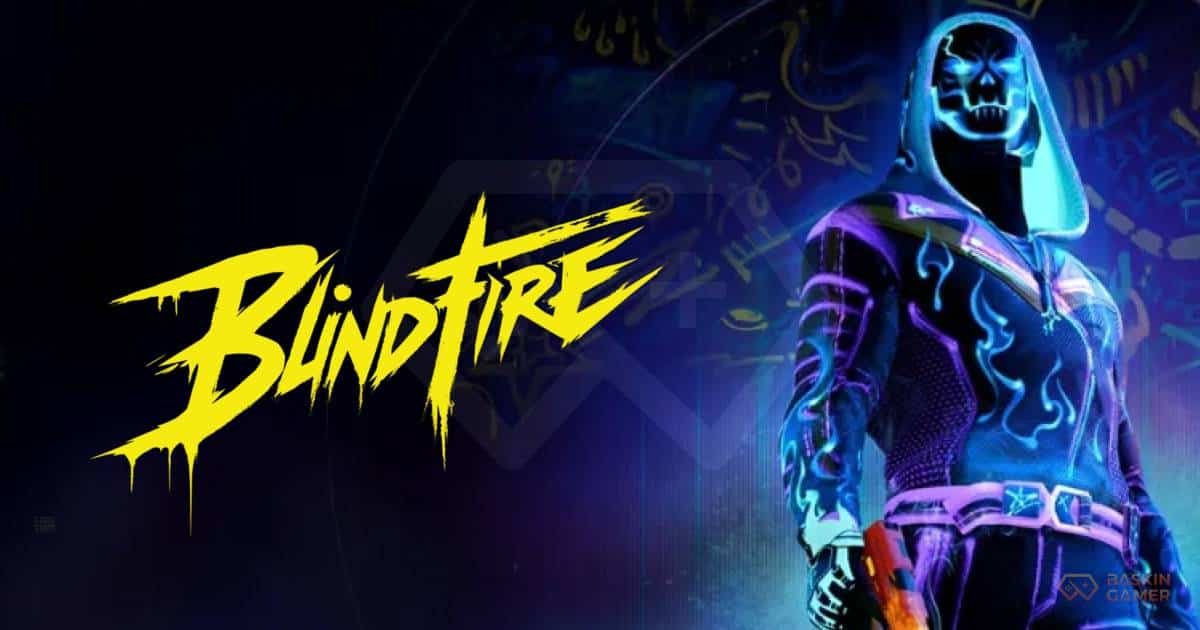
Blindfire always felt different.
Most multiplayer shooters get louder over time.
More explosions.
And more battle passes.
More crossover events.
More chaos.
Instead of flooding the screen with visual overload, the game asked players to trust something most shooters barely use anymore:
sound.
And honestly, that unusual idea helped Blindfire build one of the most fascinating FPS identities in recent memory.
Now, the game is entering its final era.
On May 7, 2026, developer Double Eleven officially transitioned Blindfire into a free-to-play experience under a new update called “Lights Out.” At the same time, the studio confirmed active content development is ending, although servers will remain online indefinitely.
That combination makes this update feel strangely emotional.
Blindfire is not exactly shutting down.
But it is clearly entering preservation mode.
Quick Summary
- Blindfire is now officially free-to-play
- The game has been rebranded as Blindfire: Lights Out
- Two new weapons arrive in the final update
- Active development is ending after this patch
- Servers will remain online indefinitely
- New accessibility features improve audio targeting support
Blindfire’s Free-to-Play Pivot Feels Different
A lot of live-service games go free-to-play because they are desperate.
Blindfire’s transition feels more thoughtful than that.
Double Eleven openly framed the decision around preservation and accessibility rather than aggressive monetization. Instead of shutting servers down quietly, the studio chose to keep the experience alive for existing players while opening the doors for new ones at no cost.
Honestly, that decision already makes Blindfire stand out in today’s multiplayer market.
Especially after several high-profile online games disappeared completely within months of release.
The “Lights Out” Update Adds New Weapons
This final content update still introduces meaningful gameplay additions.
Two major weapons arrive with the patch:
- The Desolation
- The Tempest
And both fit Blindfire’s audio-focused identity surprisingly well.
The Desolation
The Desolation is a sticky-slug shotgun designed for close-quarters disruption.
In Blindfire’s nearly pitch-black environments, that creates terrifying encounters because players suddenly lose safe movement zones inside narrow corridors.
The weapon feels less about precision and more about psychological pressure.
The Tempest
The Tempest sits on the opposite side of the spectrum.
This burst rifle rewards players who fully trust audio positioning and directional awareness. Skilled users can track enemies through sound cues alone before committing to aggressive long-range shots.
And honestly, that learning curve perfectly captures what makes Blindfire unique in the first place.
Blindfire’s Accessibility Features Deserve More Attention
This might quietly be the most important part of the update.
Blindfire already relied heavily on audio-based gameplay systems, but the new Audio Aim Assist feature pushes accessibility much further. The system provides clearer spatial sound indicators whenever enemies move close to the player’s crosshairs.
That especially benefits:
- blind players
- partially sighted players
- players relying on audio navigation
And honestly, very few competitive shooters approach accessibility this creatively.
Most accessibility systems focus on interface simplification or visual assistance. Blindfire instead leans deeper into its core mechanic while making it more readable for more players.
That approach feels genuinely smart.
What Makes Blindfire Different From Other FPS Games
Blindfire works almost like a horror game disguised as an arena shooter.
The core mechanic revolves around the Echo System.
Every movement creates exposure:
- sprinting
- jumping
- firing weapons
all generate visual ripples revealing your location briefly inside the darkness.
That means silence becomes a weapon.
Patience becomes strategy.
And panic usually gets players eliminated quickly.
It creates a slower, more psychological form of multiplayer combat compared to most modern shooters.
Even Elimination Doesn’t Fully Remove You From Matches
This system still feels incredibly underrated.
After elimination, players gain access to environmental traps like:
- Jack in the Box
- Confetti Cannon
These tools allow eliminated players to continue disrupting surviving opponents indirectly.
That mechanic keeps matches engaging longer while adding extra unpredictability to late-game situations.
And honestly, it prevents the usual downtime problem many multiplayer shooters struggle with.
The Neon Spectator Mode Still Looks Incredible
Blindfire’s visual identity deserves serious credit.
Eliminated players enter a “Blacklight” spectator mode where the dark arenas suddenly transform into vibrant neon environments. It creates a dramatic contrast between:
- active gameplay tension
- spectator visibility
- stylized environmental lighting
Even now, few multiplayer shooters look quite like this.
Why Blindfire’s Preservation Decision Matters
This part feels bigger than the game itself.
Recently, the multiplayer industry has developed a brutal habit:
if engagement drops, servers disappear.
Entire games vanish permanently.
Blindfire choosing to remain online indefinitely creates a very different message.
Double Eleven essentially treated the game like something worth preserving instead of disposable software tied only to player counts.
And honestly?
That philosophy feels increasingly rare.
The Community Could Become Blindfire’s Real Lifeline
Because marketing support is slowing down now.
No massive campaigns, No huge relaunch roadmap.
No long-term seasonal plans.
That means the future of Blindfire likely depends almost entirely on:
- community recommendations
- word-of-mouth
- social sharing
- dedicated players keeping lobbies active
And right now, this free-to-play launch window may become the game’s strongest opportunity to rebuild momentum.
Early Supporters Received Exclusive Rewards
Players who previously purchased Blindfire before the free-to-play transition received special cosmetic rewards automatically.
These include:
- blacklight-themed skins
- exclusive masks
- supporter cosmetics
And according to Double Eleven, many of these items will never become available again.
That is a nice gesture honestly.
Especially during a transition that could have frustrated original buyers otherwise.
Quick FAQ
Is Blindfire free-to-play now?
Yes. Blindfire officially became free-to-play on May 7, 2026.
Is Blindfire shutting down?
No. Double Eleven confirmed the servers will remain online indefinitely.
What is included in the Lights Out update?
The update adds:
- two new weapons
- accessibility improvements
- gameplay updates
- free-to-play support
What makes Blindfire unique?
Blindfire heavily relies on sound-based gameplay and near-total darkness instead of traditional visual shooter design.
What are the new weapons in Blindfire?
The update introduces:
- The Desolation shotgun
- The Tempest burst rifle
Final Thoughts
Blindfire probably never became the massive mainstream FPS hit some players expected.
But honestly?
That may also be why the game still feels memorable.
It tried something genuinely different.
Instead of chasing nonstop sensory overload, Blindfire built tension through:
- darkness
- silence
- uncertainty
- audio awareness
And even now, very few shooters feel remotely similar.
The move to free-to-play gives the game one final opportunity to find a larger audience while preserving what made it special in the first place.
That alone makes “Lights Out” feel less like an ending and more like a strange second chance.
Stay tuned to Baskin Gamer as we bring you the latest updates on game news, releases, and more