
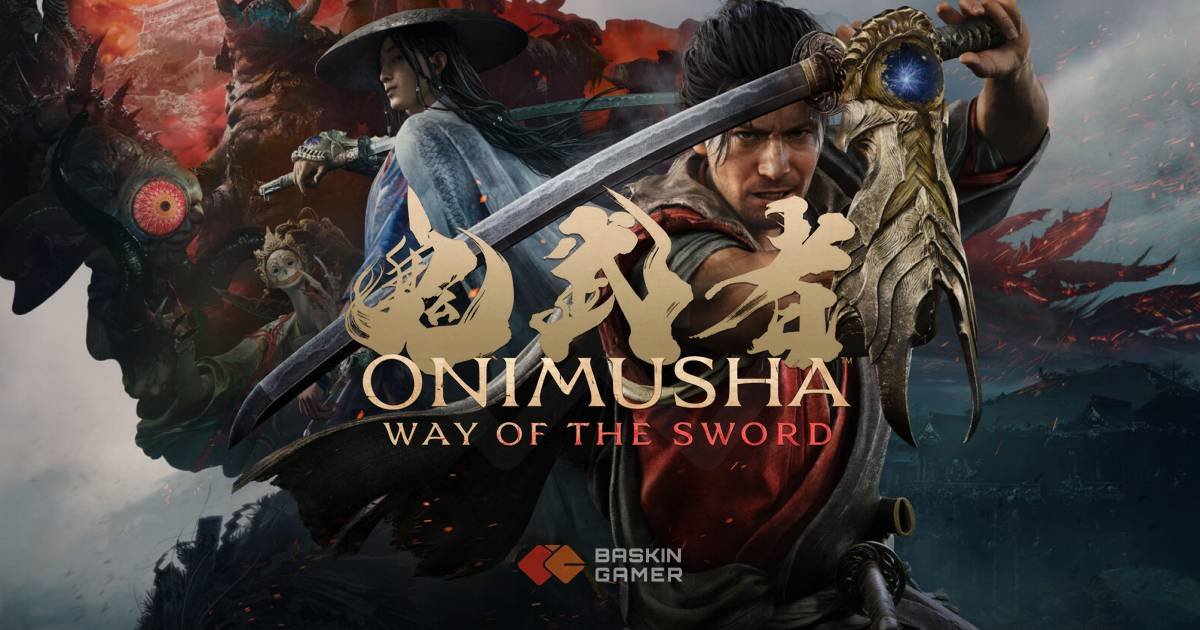
Onimusha: Way of the Sword does not take long to teach you how to swing a sword.
Learning when not to swing it is the harder lesson.
The new samurai action game puts Miyamoto Musashi in the middle of brutal fights against Genma, and simply attacking everything in front of you is rarely the safest approach. Blocking, Parrying, Deflecting and Issen all have different purposes, while Musashi’s Oni powers add another layer to combat.
Then there are the souls.
They are not just something that disappears from defeated enemies. Soul absorption is tied directly to survival, progression and Musashi’s supernatural abilities.
For a new player, all of these systems can arrive quickly.
The good news is that you do not need to master everything at once.
Once you understand what each mechanic is actually for, combat becomes much easier to read.
Quick Summary
- Watch enemy attacks before committing to your own.
- Use Guard when you need a safe defensive option.
- Parry can stagger an enemy and create an opening.
- Deflect is more demanding but can damage an enemy’s Stamina and help create an Issen Break opportunity.
- Issen is a precise counterattack that requires attacking at the right moment.
- Break Issen becomes available when an enemy’s Stamina is completely depleted.
- Oni Strength is useful for breaking through defenses and can also help during exploration.
- Oni Agility provides explosive movement and can open routes that Musashi cannot otherwise reach.
- Absorb dropped souls instead of leaving them behind whenever it is safe to do so.
- Do not treat every enemy encounter like a race to deal damage.
- A useful beginner rhythm is: Watch → Defend → Counter → Attack → Absorb.
How Onimusha: Way of the Sword Combat Actually Works
The easiest mistake to make is treating Onimusha like a conventional hack-and-slash game.
There are plenty of sword attacks, but the combat system is built around reading your opponent.
Enemies have more than a health bar to worry about. Their Stamina also matters.
Attacks and defensive actions can affect that stamina, and when an enemy becomes vulnerable, Musashi gets opportunities to deliver much more damaging attacks.
That gives combat a rhythm.
You are not simply trying to hit an enemy as many times as possible.
Instead, you are looking for the moment when your opponent gives you an opening.
Once that idea clicks, the individual mechanics start making more sense.
Start With Guard Before Learning Advanced Counters
If you are completely new, do not make Issen your first objective.
Learn to defend.
Guard gives you a reliable way to deal with incoming attacks while you learn enemy behaviour. It also gives you time to watch what an enemy is trying to do instead of immediately reacting with another attack.
That matters because enemies do not all attack in the same way.
Some swings are easier to read than others. Certain enemies can pressure you with repeated attacks, while stronger opponents may mix up their timing.
A beginner who understands when to stop attacking will usually have an easier time learning the rest of the combat system.
Think of Guard as your safety net.
You can become more aggressive once you understand what the enemy is about to do.
Parry: Your First Real Counterattack Tool
Parry is one of the most useful mechanics to learn early.
The basic idea is simple:
Guard at the right moment as the enemy’s attack arrives.
Get the timing right and Musashi can stagger the opponent, creating an opportunity to respond.
That makes Parry different from simply holding Guard.
A normal guard helps you survive an attack.
A successful Parry turns that defensive moment into an offensive opportunity.
The timing also makes it easier to understand enemy patterns.
Instead of watching an enemy only for the damage it can cause, you start watching for the exact moment its attack is about to connect.
That is an important change in mindset.
When Should You Use Parry?
Use Parry when you can clearly read an incoming attack.
It is particularly useful against enemies that repeatedly rely on predictable strikes.
Do not force the timing against every attack, though.
If you are unsure when a blow will land, a normal Guard is usually the safer choice while you learn the enemy.
The goal is not to Parry everything.
The goal is to recognize attacks that you can reliably Parry.
Deflect: More Risk, More Control
Deflect works differently from Parry.
The input requires an additional action while guarding, and the timing is less forgiving. In return, a successful Deflect can push an enemy off balance and reduce its Stamina.
That makes Deflect particularly important when you are trying to control a stronger opponent.
Think about the difference this way:
Parry helps create an opening.
Deflect helps wear down Stamina and create a bigger opportunity.
Once an enemy’s Stamina is depleted, that can lead into an Issen Break, opening the opponent to a powerful finishing attack.
This is why Deflect becomes increasingly valuable as you learn tougher encounters.
When Should You Use Deflect?
Do not try to Deflect every attack just because it is more advanced.
Start using it against enemies whose attack patterns you already understand.
Once you know roughly when a strike is coming, you can begin practicing the tighter timing.
The important part is patience.
Missing a Deflect at the wrong moment can leave you in trouble.
Issen Is About Timing, Not Button Mashing
Issen is one of the mechanics that gives Onimusha its distinctive combat identity.
The basic idea is brutally simple.
Attack at precisely the right moment as an enemy strike is about to connect.
Get the timing right and Musashi can perform a powerful counterattack.
The difficulty comes from the timing.
You cannot simply spam attacks and hope the game rewards you with an Issen.
The mechanic asks you to watch the enemy closely enough to recognize the moment before its attack lands.
That is why enemy knowledge matters.
A player who understands an enemy’s attack animation will naturally have a much easier time attempting Issen than someone who is reacting randomly.
Issen vs. Break Issen: Know the Difference
These two terms can sound interchangeable when you first encounter them, but they describe different situations.
Issen is the timing-based counterattack performed by striking at the right moment during an enemy attack.
Break Issen comes into play when an enemy’s Stamina has been completely depleted, leaving the opponent exposed to a powerful execution-style attack.
That distinction is important because it changes how you approach an enemy.
You can attempt Issen directly by learning attack timing.
A Break Issen, meanwhile, is something you can work toward by damaging the enemy’s Stamina through combat and defensive techniques.
So if an enemy is difficult to counter directly, you have another route.
Wear down its Stamina.
Create the opening.
Then take advantage of it.
Don’t Chase Issen on Every Enemy
There is a temptation to learn Issen and immediately try it against everything.
That is usually a mistake.
Issen is a high-risk timing mechanic. Missing the timing can put Musashi directly in the path of an incoming attack.
Use the early areas to practice.
Watch an enemy attack several times.
Notice how the animation begins.
Pay attention to how long it takes before the strike actually reaches Musashi.
Then start experimenting.
You do not need to land an Issen every time to improve.
Eventually, enemy attacks will start feeling less like surprises and more like patterns.
Oni Armament Gives Soul Absorption a Purpose
The Oni Gauntlet is more than a story detail.
Defeated enemies can leave souls behind, and Musashi can absorb them.
These souls have practical value during combat.
They can contribute to Musashi’s recovery and power systems, while accumulated souls can also be used to activate Oni Armament.
That means soul absorption should become part of your normal combat routine.
Once a fight ends, take a quick look at what has been left behind.
If the area is safe, absorb the souls before moving on.
Leaving them behind means throwing away a resource that could become useful later in the next encounter.
When Should You Absorb Souls?
There is one important rule:
Do not absorb souls blindly in the middle of danger.
If another enemy is attacking, staying alive comes first.
Finish the immediate threat or create enough distance to safely collect what you need.
Once the area is under control, absorb the available souls.
This becomes especially useful after difficult fights.
The resources left behind can help you recover and prepare for what comes next.
Oni Strength: When Brute Force Makes Sense
Oni Strength is one of Musashi’s supernatural abilities.
Its role is straightforward: it gives Musashi the power to break through obstacles and defenses using overwhelming force.
That makes it useful in combat, but it is not limited to fighting.
The ability also has exploration applications.
You will encounter situations where ordinary sword attacks are not enough to clear the way, and Oni Strength can provide the extra power needed to move forward.
For beginners, the important thing is not memorizing every possible application.
Just remember:
If something looks like it needs supernatural strength, Oni Strength is worth considering.
In combat, it can also help when an enemy is resisting normal attacks.
Oni Agility Is About Movement
Oni Agility serves a different purpose.
Instead of relying on raw strength, it gives Musashi explosive speed and movement options.
That can matter during combat, but it also changes how you explore the world.
Certain areas can be reached by using Musashi’s enhanced movement, including sections where he can run across specific walls.
This means Oni abilities are not simply combat superpowers.
They are also part of how the world is designed.
If you see a route that looks almost reachable but seems to require a movement ability you do not have yet, remember it.
The game may be giving you a reason to return later.
A Simple Combat Rhythm for Beginners
If all these systems still feel complicated, reduce combat to five steps.
1. Watch
Do not immediately attack.
Look at the enemy.
Learn what it is doing.
2. Defend
Use Guard when you are unsure.
You are buying time to understand the attack.
3. Counter
Once you recognize the timing, try a Parry, Deflect or Issen depending on the situation.
4. Attack
When the enemy is staggered or vulnerable, punish the opening.
Do not keep swinging after the opportunity disappears.
5. Absorb
Once the area is safe, collect the souls left behind.
That five-step rhythm is much easier to remember than trying to use every ability at once.
Watch → Defend → Counter → Attack → Absorb
As you improve, the steps will naturally start blending together.
What Should You Do Against Tougher Enemies?
Stronger enemies are where the combat system really starts asking you to think.
Do not focus only on their health.
Watch their Stamina too.
A long fight can become much easier if you learn how to reduce that stamina efficiently.
Deflects can help.
Well-timed attacks can help.
Parries can create opportunities to keep pressure on the enemy.
Once the Stamina Gauge is exhausted, look for the resulting opening and use the opportunity for a Break Issen.
This approach is usually more reliable than continuously attacking until something works.
What About Groups of Enemies?
Multiple enemies change the problem.
Against one opponent, you can focus almost entirely on its attack patterns.
A group gives you several things to watch at once.
That is where defensive discipline becomes even more important.
Do not become so focused on attacking one enemy that another one gets a free hit.
Use space when possible.
Watch for attacks coming from outside your immediate target.
If several enemies are surrounding Musashi, surviving the next few seconds can matter more than landing one extra sword strike.
A clean defensive sequence can create the opening you need to regain control.
5 Beginner Mistakes to Avoid
1. Attacking Constantly
The fastest way to make combat feel chaotic is to never stop attacking.
Give yourself time to read the enemy.
2. Ignoring Defensive Mechanics
Guard, Parry and Deflect are not optional extras.
They are fundamental parts of the combat system.
3. Trying Issen Without Learning Enemy Timing
Issen rewards precision.
If you do not know when an attack is coming, you are guessing.
4. Leaving Souls Behind
Soul absorption is connected to recovery and Oni-related abilities.
Whenever an area is safe, check for remaining souls before moving on.
5. Using Oni Abilities Without Understanding Their Purpose
Oni Strength and Oni Agility are not interchangeable.
One focuses on power and breaking through obstacles.
The other provides enhanced movement.
Knowing which problem each ability solves will make exploration much easier.
Should You Learn Every Combat Mechanic Immediately?
No.
That is one of the biggest things new players should understand.
Onimusha: Way of the Sword gives you several mechanics because they solve different problems.
You do not need to become an Issen expert during the opening hours.
Start with Guard.
Then learn Parry.
Once enemy timing feels easier to read, experiment with Deflect.
After that, begin practicing Issen.
Soul absorption should become part of your normal routine as soon as you understand what it does.
Oni abilities will become easier to appreciate once you encounter situations that actually require them.
Learning the mechanics in layers is far less frustrating than trying to master everything at once.
The Best Way to Practice Issen
If Issen is giving you trouble, stop trying to perform it during every battle.
Choose one enemy type.
Watch it.
Let it attack.
Do not worry about winning quickly.
Your first objective is simply to recognize the attack animation.
After a few encounters, try responding to the same attack with an Issen.
Even a failed attempt teaches you something about the timing.
Eventually, the animation will become familiar enough that you stop thinking about the button press.
That is when the mechanic starts to feel natural.
Don’t Treat Every Fight the Same Way
One of the biggest advantages of understanding Onimusha’s combat system is knowing that different enemies can demand different responses.
A basic opponent might be easy to handle with normal attacks and occasional Parry.
A tougher enemy may require you to work on its Stamina.
Another fight may punish aggressive play and reward careful defensive timing.
The same strategy will not always work.
Instead of asking:
“What attack should I use?”
Ask:
“What is this enemy giving me an opportunity to do?”
That question will take you much further.
Final Thoughts
Onimusha: Way of the Sword becomes much easier once you stop treating every encounter as a damage race.
The sword is important.
So is everything you do before swinging it.
Watch an enemy’s movement. Guard when you need safety. Learn when Parry is reliable. Use Deflect when you understand the timing. Practice Issen against attacks you can read. Break an enemy’s Stamina when the opportunity presents itself. Then collect the souls that remain.
Oni Strength and Oni Agility add another layer, but they are easier to understand when you think of them as tools for specific problems rather than abilities you need to activate constantly.
Most importantly, give yourself time to learn.
Watch → Defend → Counter → Attack → Absorb.
Once that rhythm starts becoming instinctive, the game’s sword fights stop feeling like a collection of complicated mechanics and start feeling like a conversation between two blades.
FAQ
How do you Parry in Onimusha: Way of the Sword?
On PS5, Parry is performed by timing your Guard as an enemy attack arrives. A successful Parry can stagger the enemy and create an opening for a counterattack.
What is the difference between Parry and Deflect?
Parry focuses on timing your Guard to stagger an incoming attacker. Deflect requires a tighter defensive input and can reduce an enemy’s Stamina, helping create opportunities for a Break Issen.
What is Issen in Onimusha: Way of the Sword?
Issen is a precision counterattack performed by attacking at the exact moment an enemy’s strike is about to connect. It is one of the more demanding techniques in the combat system.
What is Break Issen?
Break Issen becomes available after an enemy’s Stamina Gauge has been completely depleted. It gives Musashi an opportunity to perform a powerful attack against the exposed enemy.
What does Oni Strength do?
Oni Strength gives Musashi greater physical power, allowing him to break through enemy defenses and certain obstacles during exploration.
What does Oni Agility do?
Oni Agility gives Musashi enhanced movement and speed. It can be useful in combat and allows him to access certain areas during exploration.
Why should I absorb souls?
Souls can contribute to recovery and Musashi’s Oni-related abilities. They can also be accumulated for Oni Armament, making soul absorption an important part of combat.
Should beginners use Issen immediately?
You can practice it early, but there is no need to rely on Issen immediately. Learning enemy attack patterns first makes the timing much easier to understand.
Is button mashing effective in Onimusha: Way of the Sword?
Constant attacking is generally a poor way to approach the game’s combat. Defensive mechanics, enemy timing, Stamina management and counterattacks are important parts of surviving tougher encounters.
What should I learn first in Onimusha: Way of the Sword?
Start with Guard and basic enemy timing. Once you feel comfortable defending yourself, learn Parry, then Deflect and Issen. Make soul absorption part of your routine as you progress.
Stay tuned to Baskin Gamer as we bring you the latest updates on game news, releases, and more