
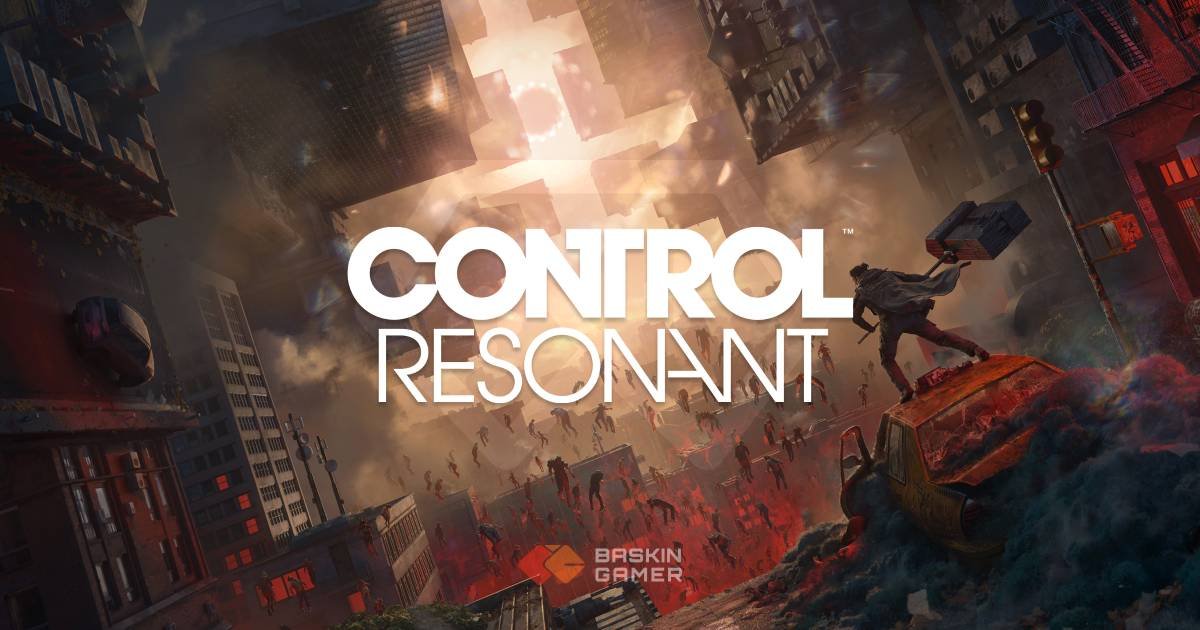
Control Resonant is finally out.
Remedy Entertainment’s latest action game launches today, September 24, putting players in the role of Dylan Faden as he steps into the strange, unstable world that has defined the Control universe.
But this is not simply another Control game with a new character.
Remedy has pushed the series toward a more melee-focused action-RPG, built around Dylan’s shapeshifting Aberrant weapon, faster movement and a much more flexible approach to combat difficulty. The game also gives players considerably more control over how challenging individual parts of combat should be.
So, if you are starting Control Resonant today, there are a few things worth knowing before heading into its distorted version of Manhattan.
Quick Summary
- Control Resonant launches September 24, 2026.
- It is available on PS5, Xbox Series X|S and PC through Steam and the Epic Games Store.
- Dylan Faden is the only playable protagonist.
- The Aberrant is Dylan’s shapeshifting melee weapon and a major part of the new combat system.
- Combat is more melee-focused than the original Control.
- Assist Mode lets players change individual combat settings instead of relying only on broad difficulty levels.
- Assist Mode can also make the game harder, not just easier.
- Remedy estimates the main story at around 25–35 hours.
- PS5 has Performance and Quality modes, while PS5 Pro adds a Balanced option.
- The game expands the Control formula beyond the Oldest House and into a warped version of Manhattan.
Control Resonant Is a Different Kind of Control Game
The first Control built much of its identity around Jesse Faden, supernatural abilities and the constantly shifting environment of the Federal Bureau of Control’s headquarters.
Resonant moves the action outside that familiar setting.
Dylan explores a transformed Manhattan where streets, buildings and spaces can behave in ways that would make very little sense in the real world. The city is divided into distinct Zones, while the Gap provides Dylan with a separate space where he can work on upgrades, test builds and develop his abilities.
That change in setting also gives Remedy more room to experiment with movement.
Dylan can double-jump, air dash and use additional traversal abilities as he progresses. The result is a character who can move through the environment much more aggressively than Jesse did in the original game.
That matters because movement is now closely tied to combat.
Dylan’s Aberrant Weapon Changes the Combat Rhythm
The biggest gameplay difference is probably the Aberrant.
Rather than relying primarily on firearms and supernatural abilities, Resonant puts a shapeshifting melee weapon at the centre of Dylan’s combat style.
The weapon can take different forms, while additional abilities give players options for ranged attacks, defensive tools and other combat approaches. Remedy has designed the system around combining melee attacks, movement, abilities and dodges instead of treating each encounter as a straightforward shootout.
That means players coming directly from Control may need to adjust their habits.
Staying at a distance is not always going to be the natural solution.
Resonant expects you to move.
It expects you to read attacks.
And it gives you more reasons to get close to enemies.
You Don’t Have to Pick a Traditional Difficulty
One of the most useful additions for new players is Assist Mode.
Instead of forcing players to select a single difficulty setting that changes the entire experience, Remedy allows individual parts of combat to be adjusted.
You can change things such as incoming damage, outgoing damage, enemy aggression, projectile speed, the Perfect Dodge Window and the speed at which Dylan recovers Power. There are also options designed for players who want to reduce combat pressure substantially.
This is particularly useful because Resonant’s combat has more variables than the original.
Maybe the enemies are fine, but their projectiles are too difficult to react to.
Maybe you like the damage level but want a larger dodge window.
Or perhaps you simply want to experience the story without spending too much time stuck in difficult encounters.
You can adjust the specific problem instead of changing everything.
Assist Mode Can Also Make Resonant Harder
There is an important detail here that is easy to miss.
Assist Mode is not designed only for players who want an easier experience.
Remedy has also made the system work in the opposite direction.
Players can increase enemy aggression, make the dodge window smaller and increase incoming damage to create a more demanding combat experience.
That makes Assist Mode less like a traditional accessibility menu and more like a collection of gameplay controls.
You can use it to remove friction.
You can also use it to create more.
And you can change the settings during the game rather than being locked into your initial choice. Remedy also says trophies and achievements are not blocked when Assist Mode is used.
Don’t Overthink Assist Mode Before You Start
There is another useful design decision behind the system.
Remedy deliberately does not ask players to configure every Assist Mode setting before their first playthrough.
That makes sense.
If you have never played Resonant, you do not yet know which part of the combat might give you trouble.
So the better approach is simple:
Start with the normal experience.
Play for a while.
Learn how Dylan moves.
Get comfortable with the Aberrant.
Then adjust individual settings if something consistently gets in the way.
That keeps the system from becoming another menu you have to study before playing the actual game.
The Main Story Takes Around 25–35 Hours
If you are wondering how large the game is, Remedy estimates the main story at approximately 25 to 35 hours. Players who want to explore more of Manhattan and spend additional time with optional content can expect to play longer.
That puts Resonant in an interesting position.
It is significantly larger in scope than a short linear action game, but Remedy is not presenting it as an endless live-service experience.
The main story gives players a clear journey through Dylan’s story, while exploration, upgrades, build experimentation and optional activities can extend the experience.
For players who enjoyed the first Control but wanted more room to explore its world, that broader structure is one of the biggest changes to watch.
The Gap Is Important for Builds and Upgrades
Dylan also has access to the Gap, a strange space connected to his mind.
It is more than a visual change of scenery.
Players can use the Gap to unlock upgrades for Dylan and the Aberrant, test builds and craft Artifacts.
This gives Resonant a more traditional action-RPG layer.
Instead of simply unlocking abilities and moving on, players can spend time experimenting with how their character works.
That also means there may not be one perfect setup for every encounter.
A build that works well against one type of enemy may not necessarily be the one you want everywhere else.
PS5 Players Have Two Main Graphics Choices
On standard PS5 hardware, Control Resonant offers two graphics modes.
Performance Mode targets 60fps at 1440p, while Quality Mode targets 30fps at 2160p.
PS5 Pro adds a third option.
Balanced Mode targets 40fps at 2160p with ray tracing when used with a 120Hz-compatible display. PS5 Pro also has Performance and Quality modes, with the latter adding ray tracing.
For most players, the decision will come down to what matters more during combat.
If responsiveness is your priority, Performance is the obvious place to start.
If visual detail is more important, Quality gives you the higher-resolution target.
And if you have the right display and a PS5 Pro, Balanced provides another middle ground.
Control Resonant Is Built Around Fast Combat
Remedy says the game was designed with 60fps gameplay in mind, placing responsiveness at the centre of the experience.
That makes sense when looking at Dylan’s movement.
Double jumps, air dashes, supernatural abilities and melee attacks all need to work together quickly. Combat is less about standing in one position and more about controlling space while reacting to enemies.
The game also makes use of the PS5’s DualSense features, including adaptive triggers and 3D Audio support.
Those features are not the reason to play Resonant, but they reinforce the game’s focus on physical feedback and fast combat.
Dylan Is the Only Playable Character
One thing returning players should understand immediately is that Dylan is the sole playable protagonist.
Jesse Faden remains important to the story, but Resonant shifts the player’s perspective to her brother. Dylan’s past, his relationship with Jesse and the consequences of what happened in the first game all feed into his new role.
That gives the sequel a different starting point.
You are not simply returning as a more powerful version of Jesse.
You are learning a different character’s abilities, movement and combat rhythm.
You Don’t Need to Treat Resonant Like the Original Control
This may be the most useful thing to remember before starting.
Don’t expect the first game to tell you exactly how to play this one.
The connection is obvious, but the combat has moved toward melee, movement and build experimentation.
If you spend the entire game trying to recreate Jesse’s approach, you may miss what Remedy is actually doing differently.
Instead, experiment.
Try the Aberrant forms.
Test your abilities.
Use movement aggressively.
Change your build when something stops working.
And if one particular combat mechanic is becoming frustrating, use Assist Mode rather than turning the entire game into a chore.
Control Resonant Launches at an Interesting Point for the Series
Resonant has a difficult job.
It needs to feel like Control without simply repeating Control.
The answer appears to be a combination of three major changes: a new protagonist, a larger environment and a more melee-focused combat system.
Dylan gives Remedy a different character to build around.
Manhattan gives the series a much larger playground.
And the Aberrant gives combat a new centre of gravity.
The result is a sequel that is trying to expand the formula rather than simply reproduce it.
Whether that balance works for every returning player will depend on what they enjoyed most about the original.
But there is at least a clear reason for the sequel to exist.
It is doing something different.
What Should You Know Before Starting Control Resonant?
If you are launching the game today, keep it simple.
Learn Dylan’s movement first.
His mobility is a major part of both exploration and combat.
Give the Aberrant time to click.
The melee system is one of the biggest changes from the original Control.
Don’t ignore the Gap.
Upgrades and build experimentation are an important part of progression.
Don’t be afraid of Assist Mode.
You can change individual settings without changing everything else.
Don’t worry about making the perfect build immediately.
Resonant gives you room to experiment.
Try Performance Mode if responsiveness matters to you.
The game was designed with fast combat in mind.
And most importantly:
Let Resonant be its own game.
It may carry the Control name, but Remedy has clearly changed the way the player moves, fights and explores.
Control Resonant Starts a New Chapter for Remedy’s Universe
Control Resonant is now available, and its launch represents a significant change for the series.
The Oldest House is no longer the only place where the strange side of Control can unfold. Dylan now has a much larger environment to explore, a completely different combat identity and a system that lets players shape the difficulty around their own preferences.
The most interesting part may be that Remedy has not treated accessibility and combat customisation as separate ideas.
Assist Mode lets players decide how much challenge they want — including players who want more of it.
That makes Resonant easier to approach without necessarily making the game less demanding.
For anyone starting today, there is no need to master everything before the first major fight.
Start moving.
Learn the Aberrant.
Explore Manhattan.
Then decide how you want to play.
FAQ
When did Control Resonant release?
Control Resonant launched on September 24, 2026 for PlayStation 5, Xbox Series X|S and PC.
Who is the main character in Control Resonant?
Dylan Faden is the sole playable protagonist in Control Resonant. Jesse Faden remains an important part of the story but is not the playable lead.
What is the Aberrant in Control Resonant?
The Aberrant is Dylan’s shapeshifting melee weapon and one of the central parts of Resonant’s new combat system.
How long is Control Resonant?
Remedy estimates that the main story takes approximately 25–35 hours, with additional time available for exploration and completionist activities.
Does Control Resonant have Assist Mode?
Yes. Assist Mode lets players independently adjust several combat parameters, including enemy aggression, damage, dodge timing and other mechanics. It can also be used to make the game harder.
Can you change Assist Mode settings during the game?
Yes. Remedy designed Assist Mode so players can enable or disable it during gameplay and adjust individual settings as needed.
Does Assist Mode disable trophies?
No. Remedy says Control Resonant does not gate trophies or achievements behind Assist Mode.
What graphics modes does Control Resonant have on PS5?
Standard PS5 offers Performance and Quality modes. Performance targets 60fps at 1440p, while Quality targets 30fps at 2160p. PS5 Pro additionally offers a Balanced mode targeting 40fps at 2160p with ray tracing when paired with a 120Hz-compatible display.
Stay tuned to Baskin Gamer as we bring you the latest updates on game news, releases, and more