
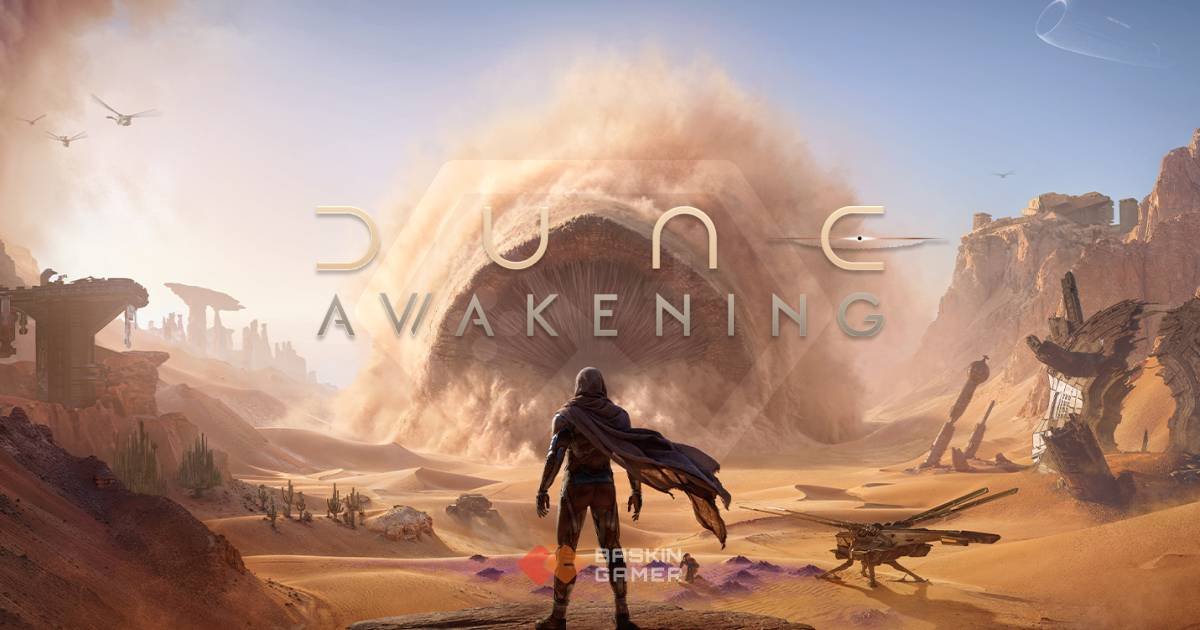
Arrakis does not give new players much time to feel comfortable.
You wake up with little more than a reason to survive, a huge desert around you, and plenty of things that can kill you. Dune: Awakening then starts opening up its crafting, combat, exploration, character progression and story systems one by one.
That can make the first few hours feel like a lot.
The good news is that you don’t need to understand all of Arrakis immediately.
The best way to start is to follow the early journey, learn how survival works, build a small base, and let the game introduce its deeper systems as you progress.
And with the September 22 update, there is another choice to make before you even begin: whether you want to play alone or enter the wider multiplayer world.
Quick Summary
- Start with single-player if you want to learn the game at your own pace.
- Follow the early Journey and story objectives instead of wandering too far immediately.
- Learn how to manage water, heat and shelter before worrying about advanced equipment.
- Gather basic materials such as Plant Fiber, Salvaged Metal and Copper as you explore the starting area.
- Build your first useful equipment before spending time decorating your base.
- Don’t rush into the Deep Desert.
- You can learn multiple Schools of the Imperium, so your first combat path does not permanently define your character.
- PvP is now optional, including PvE options for the Deep Desert and Landsraad.
- Explore gradually as your gear and vehicle options improve.
- Save advanced systems such as Specializations and Augmentations for later rather than trying to understand everything immediately.
Start by Choosing How You Want to Play
The first major decision is not your weapon.
It’s your world.
The September 22 update adds a full single-player experience across the entire game. You can choose single-player when starting and play through the story, open world and Deep Desert without other players appearing in your world.
Single-player also gives you three preset difficulty options, along with manual settings that let you change individual survival elements.
You can adjust things such as resource gathering, experience gain, enemy difficulty, item durability, sandstorms, sandworms and what happens to items when you die.
That makes single-player a particularly useful starting point if this is your first survival game.
If you want the social side of Dune: Awakening, multiplayer is still there. The important change is that PvP is no longer something you have to constantly deal with. Funcom has made the game playable entirely through PvE, including PvE and PvP versions of the Deep Desert.
So don’t choose a mode because you think one is the “correct” way to play.
Choose the experience you actually want.
Don’t Ignore the Early Journey
Once you’re on Arrakis, the easiest mistake is to treat Dune: Awakening like a normal open-world game.
It isn’t.
The early Journey exists to introduce the systems in roughly the order you’ll need them.
The September release also includes improvements to new-player onboarding, tutorials and early journeys, so new players should follow those objectives rather than immediately trying to explore the entire map.
Your first hours are about learning a rhythm:
gather → craft → survive → explore → unlock → build → move forward.
The game gradually introduces better equipment, new areas and additional progression systems.
You don’t need to rush ahead.
Water Is Your First Real Problem
Arrakis has one rule you should learn early:
Water matters.
The desert is constantly working against you through heat and exposure. Shade, night, shelter and equipment become important because survival isn’t simply about having enough health to fight another enemy.
Your water situation affects how long you can remain outside safely.
The early game teaches you to gather water and eventually craft equipment that makes survival easier. A stillsuit is particularly important because it helps you manage the harsh environment and reduces how quickly dehydration becomes a problem.
Don’t treat water as something you deal with only when the meter gets low.
Make checking your supplies part of your routine before leaving your base.
That one habit will save you a lot of unnecessary trips back across the desert.
Gather Before You Start Crafting
Your first instinct may be to search for the rarest materials you can find.
Don’t.
Early progression is built around common resources.
The starting area around Hagga Basin South provides many of the materials needed for your early equipment and crafting progression, including Plant Fiber, Salvaged Metal and Copper.
Pick up useful materials while you’re moving between objectives.
Plant Fiber, in particular, is used very early for basic equipment. One of the opening Journey objectives asks you to gather Plant Fiber and salvage metal with a Cutteray before creating your initial gear.
The important lesson isn’t to memorize every recipe.
It’s to stop treating gathering as a separate activity.
If you see useful resources while travelling, collect them.
You’ll need them sooner than you think.
Build Your First Base for Survival, Not Looks
Your first base doesn’t need to be impressive.
It needs to be useful.
Think of it as a place where you can safely return, craft equipment, process resources and prepare for your next trip.
Build the essentials first.
Storage, crafting stations and the equipment needed to support your progression matter much more than creating a huge structure during your first few hours.
You can always build something better later.
A small functional base also makes it easier to understand the game’s crafting system because you’ll naturally start seeing what each machine is used for and which materials you need next.
Don’t Worry About Choosing the Perfect Combat Path
Character progression can look complicated when you first see the Schools of the Imperium.
There are five archetypes:
- Trooper — ranged firepower and demolition
- Swordmaster — close-quarters combat
- Mentat — reconnaissance and strategy
- Bene Gesserit — physical mastery and mental manipulation
- Planetologist — traversal and cartography
But you are not permanently locked into a single identity.
The game allows you to learn abilities from different Schools as you progress. Planetologist is the exception at character creation because it has to be learned later in the world.
That means your early choice should be based on the type of combat you want to try, not on finding some supposedly perfect build before you’ve even learned the game.
Experiment.
You’ll have opportunities to develop your character further as you explore Arrakis.
Learn the Difference Between Gear and Progression
There are several layers of progression in Dune: Awakening.
You’ll improve your equipment.
You’ll unlock abilities.
You’ll research new crafting options.
Later, you’ll also encounter systems such as Specializations and Augmentations.
Specializations are divided into Combat, Crafting, Gathering, Exploration and Sabotage, allowing your progression to reflect how you actually play. Augmentations then provide another layer of customization for higher-level equipment.
You don’t need to optimize these systems during your first few hours.
Follow the story and normal progression first.
Once you understand whether you enjoy combat, exploration, crafting or gathering more, the later specialization choices will make much more sense.
Explore Arrakis, But Let Your Gear Set the Pace
The map is tempting.
You can see locations in the distance and immediately want to know what’s there.
That’s part of the fun.
But Arrakis has different regions with different levels of danger and resources. The early Hagga Basin area is designed to teach you the fundamentals before you start pushing farther into the world.
Your first major goal should be getting comfortable with the starting region.
Learn where resources are.
Learn how your equipment works.
Learn how combat feels.
Build your first base.
Then start pushing outward.
Your Sandbike eventually becomes an important part of this transition because it gives you much greater freedom to travel beyond the starting area.
Don’t Rush Into the Deep Desert
The Deep Desert is one of the biggest attractions in Dune: Awakening.
It is also not where a brand-new player needs to spend their first afternoon.
The region contains valuable resources, shipwrecks, testing stations and major endgame activities, but it is designed around much greater risks and rewards.
The current game gives players both PvE and PvP versions of the Deep Desert, so even players who don’t want PvP can eventually experience its content.
But access does not mean readiness.
Get your basic survival equipment sorted first.
Learn the game.
Build up your character.
Then start treating the Deep Desert as your next challenge rather than your starting destination.
How PvP Works Now
This is one area where older Dune: Awakening guides can be misleading.
PvP is now optional.
Funcom changed the game so that its major systems can be experienced through PvE. The Deep Desert has separate PvE and PvP instances, while the Landsraad has also been redesigned so its progression can be experienced without PvP.
That means you don’t need to jump into player-versus-player combat simply because you’re playing Dune: Awakening.
If competitive multiplayer is what you want, it’s available.
If you would rather learn Arrakis without fighting other players, the current game gives you that option too.
Keep Your Early Goals Simple
For your first few hours, don’t worry about reaching the endgame.
Give yourself a short checklist instead:
Survive the desert.
Get reliable water.
Craft basic equipment.
Build a functional base.
Follow the main Journey.
Learn your combat abilities.
Gather resources whenever you’re travelling.
Unlock better tools and movement options.
Once those things become routine, the larger game starts making much more sense.
You will naturally encounter new trainers, crafting research, vehicles, factions, contracts and exploration systems as the story moves forward.
Five Beginner Mistakes to Avoid
Building too much too early
Your first base is temporary infrastructure. Make it useful before making it beautiful.
Exploring without enough supplies
Arrakis is not a place where you want to discover that you’re running out of water several minutes from safety.
Trying to understand every system immediately
There are a lot of progression systems. You don’t need to master them all on day one.
Treating every distant location as something you should visit
Some areas are better approached after you’ve improved your equipment and mobility.
Assuming old guides are still accurate
The September 2026 version has substantial changes, including single-player, optional PvP, updated onboarding, new progression systems and other quality-of-life improvements. Guides written around the original PC launch can therefore describe a very different game.
What Should You Do After the First Few Hours?
Once you’ve established yourself, the game starts opening up.
Continue the Book One story.
Improve your equipment.
Learn additional Schools.
Expand your base.
Explore new regions.
Start working through contracts and faction progression.
Eventually, systems such as the Landsraad and Specializations become much more important. Specializations allow you to invest in different playstyles, while later gear progression introduces Augmentations and more demanding activities.
At that point, you aren’t really learning how to survive anymore.
You’re deciding what kind of player you want to become on Arrakis.
The Best Way to Start Dune: Awakening
You don’t need a perfect character, a perfect base or a perfect progression plan when you land on Arrakis.
You need to learn the basics.
Follow the early Journey. Keep water available. Gather materials as you move. Craft the equipment the game introduces. Build a practical shelter. Learn one combat style before experimenting with others.
Most importantly, don’t rush the parts of the game that are designed for later.
Dune: Awakening is much easier to understand once you stop trying to understand all of it at once.
Arrakis is huge.
You have plenty of time to discover it.
FAQ
Is Dune: Awakening good for solo players?
The September 22 update adds a full single-player mode covering the game’s story, open world and Deep Desert. Single-player also includes customizable survival settings and three preset difficulty levels.
Should beginners play single-player or multiplayer?
There is no required choice. Single-player is useful if you want to learn at your own pace, while multiplayer gives you the larger shared-world experience. PvP is now optional.
What should I collect first in Dune: Awakening?
Focus on the basic resources used for early equipment and crafting, including Plant Fiber, Salvaged Metal and Copper. Gathering materials while travelling is more efficient than constantly making separate resource trips.
Is water important in Dune: Awakening?
Yes. Water management is one of the game’s core survival systems. Stillsuits, shelter, shade and other survival tools become increasingly important as you explore Arrakis.
Can you change your character build later?
Yes. The game allows you to learn abilities from multiple Schools of the Imperium, so your initial combat path does not permanently determine your entire character.
Is PvP required in Dune: Awakening?
No. Funcom has made PvP optional and added PvE alternatives for major parts of the game, including the Deep Desert and Landsraad.
When should I enter the Deep Desert?
Treat the Deep Desert as a later goal rather than something you need to rush toward immediately. Build up your survival equipment, character progression and mobility first.
Stay tuned to Baskin Gamer as we bring you the latest updates on game news, releases, and more