
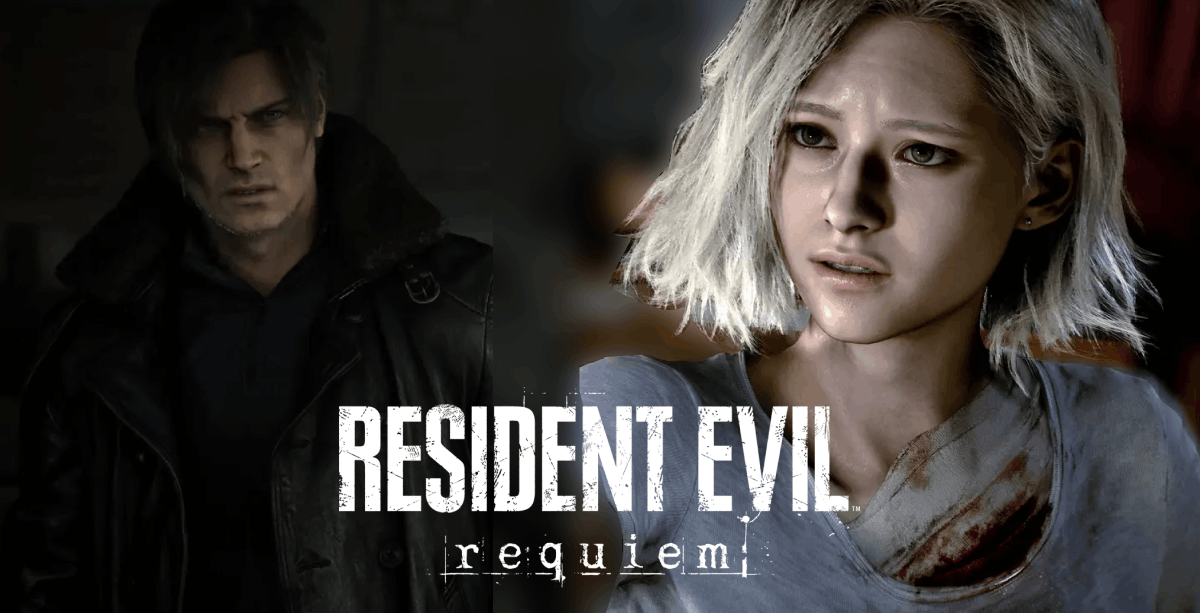
Resident Evil Requiem, One of the quiet frustrations in modern survival horror is repetition. Multiple protagonists often mean duplicated upgrades, split resources, and hours spent re-earning the same power level twice.
With Resident Evil Requiem, Capcom appears to have addressed that issue directly. Instead of separate progression trees for its dual protagonists, the game introduces a unified system known as the Shared Cache.
This structural change reshapes the campaign’s flow, sharpens tension, and reduces replay fatigue.
What the Shared Cache System Actually Is
The Shared Cache is not a shared inventory.
Leon and Grace still carry items separately, using very different storage rules.
Instead, the Shared Cache governs long-term progression.
Throughout the campaign, players earn Shared Cache Points through combat encounters, puzzle completion, and exploration milestones. Players spend these points at Safe Room terminals using a universal upgrade interface.
When one character is upgraded, the other benefits indirectly.
Upgrade Leon’s handgun power, and Grace doesn’t suddenly gain the weapon. Instead, she receives a passive proficiency boost tied to the same weapon class, such as improved critical hit chance or faster stabilization.
Progression stays synchronized, even when playstyles remain distinct.
Why Capcom Abandoned Split Progression
Previous Resident Evil titles with multiple characters often forced players into parallel grind loops. Players had to upgrade weapons twice and reacquire resources. Momentum stalled.
Resident Evil Requiem avoids this by decoupling power growth from character presence.
You are no longer punished for switching protagonists. The game assumes you will, and it adjusts progression accordingly.
This design choice keeps difficulty consistent across chapters. Leon never feels overpowered while Grace feels under-equipped, or vice versa. Tension scales evenly, which is critical in a horror game that relies on pacing rather than raw difficulty spikes.
Leon and Grace Still Play Very Differently
While progression is shared, moment-to-moment gameplay is not.
Leon operates with a 7×10 attaché case, echoing the spatial inventory management of Resident Evil 4. His strength lies in direct engagement, recoil control, and adaptability under pressure.
Grace, by contrast, uses a limited 8-slot grid reminiscent of classic survival horror layouts. Her design emphasizes planning, restraint, and environmental awareness.
The Shared Cache bridges these styles without flattening them.
Leon upgrades action efficiency. Grace upgrades survivability and analysis.
Both grow stronger, but in ways that respect their roles.
No Merchant, No Fragmented Systems
Another notable shift is the removal of a traditional merchant.
Capcom has confirmed there is no roaming vendor or character-specific shop. Instead, all upgrades flow through Safe Room terminals, reinforcing the importance of those spaces as moments of safety and decision-making.
This approach simplifies progression without removing strategy. Players must still choose where to invest points. The difference is that those choices now matter across the entire campaign, not just for the current character.
Leon vs. Grace: How Progression Stays Balanced
| Character | Core Focus | Shared Cache Impact |
|---|---|---|
| Leon S. Kennedy | Weapon mastery, recoil control, reload speed | Unlocks parallel damage and precision boosts |
| Grace Ashcroft | Detection, stealth efficiency, crafting | Gains passive benefits from Leon’s upgrades |
| Shared Cache | Universal progression | Eliminates duplicate grinding |
The result is a system that respects time without reducing challenge.
Why This Matters for Replayability
Shared progression dramatically changes how repeat playthroughs feel.
Instead of re-building power from scratch, players can focus on route optimization, puzzle mastery, and resource efficiency. This encourages experimentation rather than repetition.
Speed-focused players benefit. Completionists benefit. Narrative-focused players benefit.
The system reduces friction without reducing depth.
Final Thoughts
The Shared Cache system is not flashy. It doesn’t redefine combat or rewrite horror mechanics.
What it does instead is remove friction.
By respecting player time and eliminating redundant progression, Resident Evil Requiem quietly modernizes one of the genre’s most persistent problems. Leon and Grace remain distinct, vulnerable, and human — but the grind between them is gone.
For a survival horror game built on tension, that balance may matter more than any new enemy design.
This guide explains how the Shared Cache system works in Resident Evil Requiem and how it affects Leon and Grace’s progression.
Frequently Asked Questions
Do Leon and Grace share items in Resident Evil Requiem?
No. Leon and Grace use separate inventories with different layouts. However, they share progression through the Shared Cache system, which synchronizes long-term upgrades.
What are Shared Cache Points?
Shared Cache Points are earned through combat, exploration, and puzzles. They are spent at Safe Room terminals to unlock upgrades that affect both protagonists.
Is there a merchant in Resident Evil Requiem?
No. Capcom has confirmed there is no traditional merchant. All upgrades are handled through the Shared Cache at Safe Room terminals.
Does upgrading Leon directly make Grace stronger?
Yes, indirectly. Leon’s upgrades unlock parallel passive bonuses for Grace, ensuring both characters remain balanced throughout the campaign.
Stay tuned to Baskin Gamer as we bring you the latest updates on game news, releases, and more