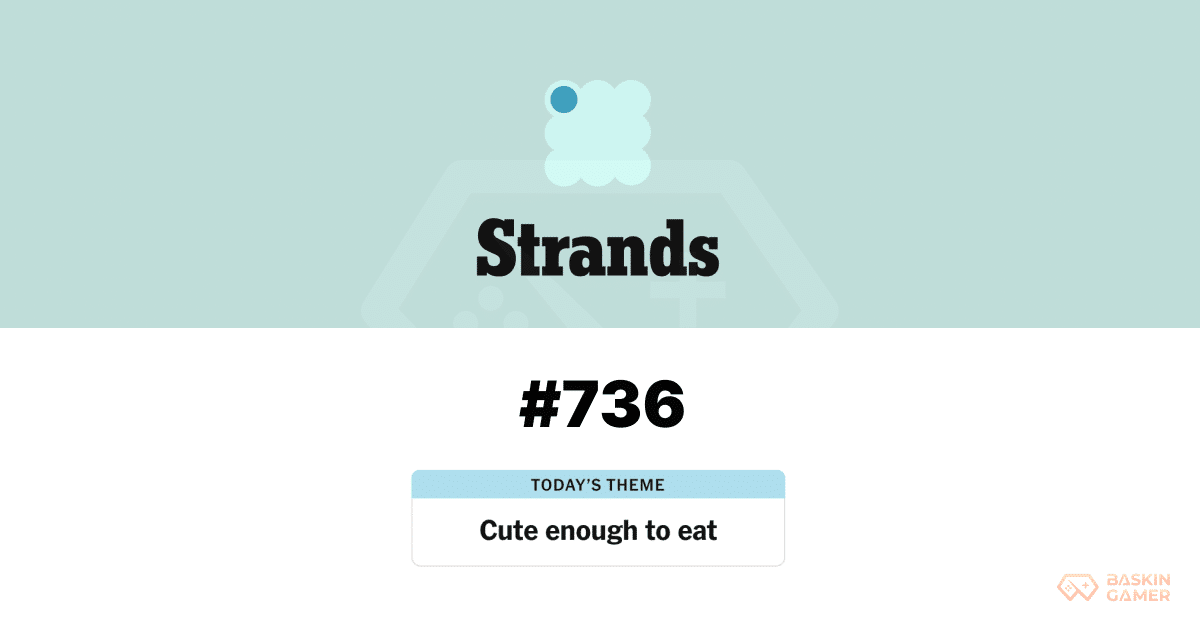
Monday’s NYT Strands puzzle arrives with an unexpectedly sweet theme.
At first glance, the prompt “Cute enough to eat” might sound like something from a dessert menu. Instead, the puzzle plays with a familiar part of everyday language: affectionate nicknames. Words people use when they speak to someone they care about.
That small linguistic twist is what drives Strands puzzle #736, released on March 9, 2026.
Many players immediately recognize the idea behind the theme. Yet the grid itself still requires careful searching. Some of the words hide easily in the corners, while the spangram stretches across the board in a way that can be difficult to trace at first.
Once the pattern becomes clear, however, the puzzle begins to unfold naturally.
Key Points: NYT Strands #736
- Puzzle date: March 9, 2026
- Theme: Cute enough to eat
- Spangram: ENDEARMENTS
- Total theme words: 6
- Puzzle difficulty: Moderate
This puzzle blends everyday language with playful word choices. The result feels lighthearted while still offering enough challenge to keep players thinking.
Today’s Strands Spangram
The spangram for today’s puzzle is ENDEARMENTS.
This eleven-letter word runs horizontally through the center of the grid. In Strands puzzles, the spangram usually captures the entire theme in a single concept.
That pattern appears clearly here.
Every theme word in the grid is a form of affectionate nickname—the kind of playful language people often use with close friends, partners, or family members.
Once players recognize that theme, the rest of the puzzle becomes easier to navigate.
All Theme Words in Strands #736
Here are the words hidden within today’s puzzle.
| Theme Word | Description |
|---|---|
| PUMPKIN | A classic affectionate nickname |
| NUGGET | Often used for someone small or lovable |
| BEAN | A short but tricky word to locate |
| MUFFIN | A sweet food term used playfully |
| DUMPLING | A longer nickname hidden in the grid |
| PEANUT | Another playful term of affection |
Most of these words appear in different corners of the board. Finding even one or two early can quickly reveal the pattern behind the theme.
Why the Theme Feels Familiar
The charm of today’s puzzle comes from its connection to everyday language.
Many cultures use food names as affectionate nicknames. Words like “pumpkin,” “peanut,” or “muffin” sound playful and warm. They create a sense of closeness between people.
Strands puzzle #736 builds directly on that idea.
Instead of focusing on desserts or cooking, the puzzle explores how these food names appear in conversation as expressions of affection.
That small linguistic twist is what gives the puzzle its personality.
The Psychology of Food-Based Endearments
Food-based nicknames appear in many languages.
They often reflect warmth, comfort, or familiarity. Sweet foods in particular carry emotional associations that make them feel natural as affectionate terms.
For example:
- “Pumpkin” often suggests warmth and affection.
- “Peanut” can refer to someone small or adorable.
- “Muffin” carries a playful, gentle tone.
Linguists sometimes describe these words as high-sentiment language. They signal emotional closeness rather than literal meaning.
By building a puzzle around these expressions, Strands connects wordplay with everyday speech patterns.
That connection is part of what makes the puzzle memorable.
Strategy Tips for Solving Today’s Puzzle
Although the theme itself is fairly approachable, the grid layout can still slow players down.
A good starting strategy is to search for the longer or more recognizable words first.
Look for Familiar Nicknames
Words like PUMPKIN and MUFFIN often appear more clearly because of their distinctive letter combinations. Spotting them early can help reveal the structure of the grid.
Pay Attention to Short Words
The four-letter word BEAN is surprisingly easy to miss. Short words often blend into surrounding letters, so scanning carefully across rows can help locate them.
Let the Spangram Guide the Puzzle
Once part of ENDEARMENTS becomes visible, it often provides a path toward the remaining theme words.
The spangram acts like a backbone for the grid.
Following it across the board usually reveals new connections between hidden words.
Frequently Asked Questions about NYT Strands 736 Answer Today
What is the spangram for NYT Strands on March 9, 2026?
In puzzle #736, the main spangram is ENDEARMENTS, a word that ties together the theme of food-inspired terms people often use as affectionate nicknames.
What are the theme words in Strands #736?
The theme words hidden in the puzzle are PUMPKIN, NUGGET, BEAN, MUFFIN, DUMPLING, and PEANUT.
Final Thoughts on NYT Strands 736 Answer Today
Some Strands puzzles rely on complex vocabulary.
Others, like today’s grid, lean on something more familiar.
Strands #736 uses everyday language, simple nicknames that people already recognize. That approach makes the theme easy to understand while still leaving room for a small challenge inside the grid.
Once players identify the idea behind the puzzle, the rest falls into place.
A few sweet nicknames.
One long spangram.
And a reminder that even word puzzles can have a little personality.
Stay tuned to Baskin Gamer as we bring you the latest updates on game news, releases, and more