
PS3 emulation just got one of its biggest “small” wins in years.
At first glance, a 5% to 7% performance boost might not sound dramatic. In most gaming headlines, that barely moves the needle. But in the world of RPCS3, where the PlayStation 3’s famously strange hardware has been fighting modern CPUs for over a decade, that kind of gain is a serious milestone.
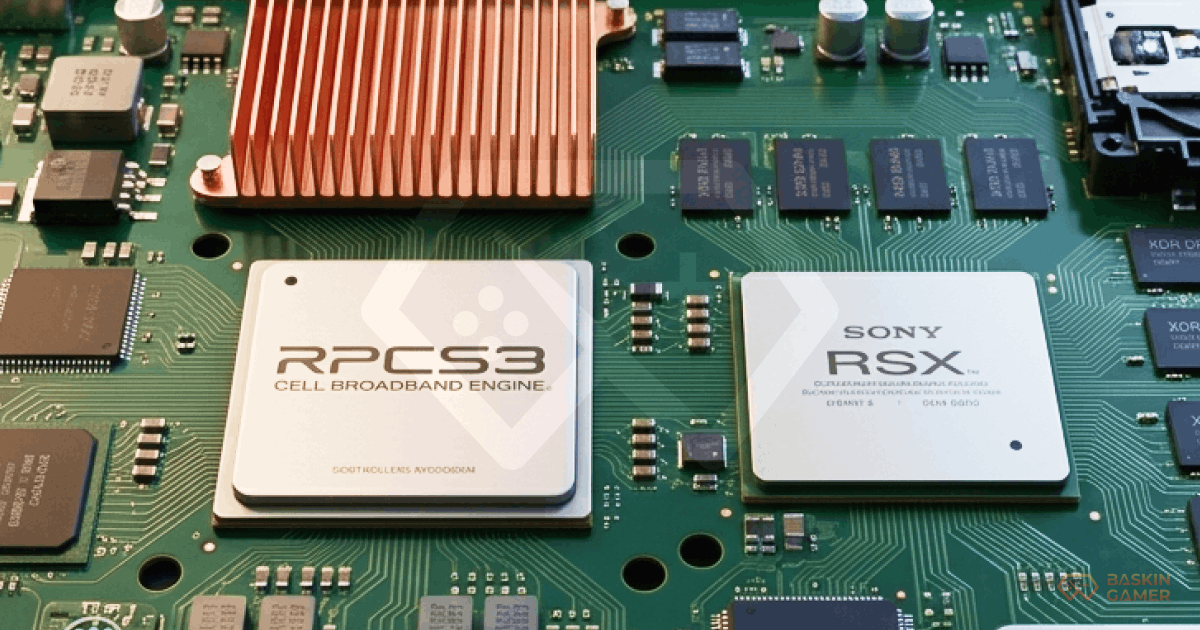
As of early April 2026, the RPCS3 team says it has achieved a new Cell CPU emulation breakthrough by recognizing previously unknown SPU usage patterns. In plain English, the emulator now understands more of the PS3’s weird behavior and can translate that work into more efficient PC code. The result is simple: better performance across the entire library, not just one or two hand-picked games. RPCS3’s own public explanation and multiple reports all point to the same result, with Twisted Metal showing around a 5–7% average FPS increase as the showcase example.
Key Points / Quick Summary
If you want the fast version, here is what happened:
| Update Detail | What It Means |
|---|---|
| Main Breakthrough | New Cell CPU / SPU optimization in RPCS3 |
| Key Contributor | Elad (RPCS3 contributor) |
| Real-World Example | Twisted Metal gains about 5–7% average FPS |
| Who Benefits | All CPUs, from budget systems to high-end rigs |
| Why It Matters | Improvement applies across the full PS3 library, not just one game |
| Compatibility Milestone | Around 73.82% of PS3 games now listed as Playable |
That last part matters a lot. RPCS3 is not just getting faster. It is getting closer to becoming the most complete way to preserve and revisit the PS3 era on modern hardware. Early-April reporting also notes the project’s 73.82% “Playable” milestone, which means a huge chunk of the console’s library can now be completed from start to finish with only minor issues.
Why This Update Is a Bigger Deal Than the Number Suggests
Here is the important part: this is not a flashy “one game now runs 30 FPS higher” patch.
This is the kind of optimization emulator fans love because it improves the foundation.
The PS3’s Cell processor was always the headache. It split work between a main core and several SPUs that handled specialized tasks like physics, animation, and audio. That architecture made the console fascinating in 2006 and painful to emulate for years afterward. According to fresh reporting, RPCS3’s new work improves how those SPU patterns are recognized and recompiled into native PC instructions, reducing overhead in a way that can help every game instead of just a few edge cases.
That is why a 7% gain here feels bigger than a 7% gain in a normal PC patch.
This is deep, low-level progress.
Why Twisted Metal Became the Poster Child
If you have seen this update trending, you have probably seen Twisted Metal attached to it.
That is not random.
RPCS3 specifically used Twisted Metal as the public example because it is one of the most SPU-heavy and CPU-stressful PS3 games in the emulator’s library. In other words, it is exactly the kind of title that exposes weaknesses in PS3 emulation. So when a game like that picks up a 5–7% average FPS uplift, it sends a strong signal that the underlying optimization is real. Multiple reports cite the same Twisted Metal comparison between recent builds as the headline benchmark.
That is why the emulation community got excited fast.
Not because the number was huge, but because the example was convincing.
Steam Deck and Budget PC Users Might Feel This the Most
This is where the update gets genuinely exciting for normal players.
High-end desktops will appreciate the smoother overhead, sure. But the real winners may be people running CPU-limited hardware — especially handhelds and older budget systems. RPCS3 itself said this change can help all CPUs, “from low-end to high-end,” and follow-up coverage noted reports of a dual-core Athlon 3000G seeing improved audio rendering and slightly better performance in Gran Turismo 5. That is exactly the kind of detail that makes this update feel meaningful outside benchmark charts.
So yes, if you play RPCS3 on a Steam Deck, mini PC, or older desktop, this is the kind of update worth paying attention to.
The Bigger Picture: PS3 Preservation Is Quietly Winning
This is the part that matters beyond frame rates.
Sony still has not solved PS3 preservation in any clean, modern way. That leaves projects like RPCS3 doing the heavy lifting for an entire generation of games that are either stuck on aging hardware or awkward to revisit legally and technically. Recent coverage even framed RPCS3 as the practical answer for PS3 access in a world where official backward compatibility still feels unlikely.
That is why this breakthrough matters.
It is not just about squeezing extra FPS out of Twisted Metal.
It is about making one of gaming’s most difficult libraries a little easier to preserve, study, and actually enjoy.
Final Thoughts on RPCS3 update
RPCS3’s latest update is the kind of news that casual readers may scroll past and hardcore players immediately bookmark.
A 5–7% boost sounds modest.
In PS3 emulation, it is not.
It means better efficiency.
It means fewer CPU bottlenecks.
It means demanding games get a little less stubborn.
And it means the emulator keeps doing what great preservation projects always do: getting quietly better in ways that stack up over time.
That is the real headline.
Not that the impossible got solved overnight.
Just that it got a little easier again.
And for the PS3, that still feels kind of incredible.
Are you running RPCS3 on a high-end rig, a budget PC, or a Steam Deck in 2026?
FAQ about RPCS3 update
What is the new RPCS3 update in April 2026?
RPCS3 introduced a new Cell CPU / SPU optimization that improves how the emulator handles certain PS3 instruction patterns. The team says it benefits all games, not just specific titles.
How much faster is RPCS3 after the Cell CPU breakthrough?
The most cited public example is Twisted Metal, which gained around 5% to 7% average FPS between recent builds. That benchmark has been repeated across multiple early-April reports.
Does this RPCS3 update help low-end CPUs and Steam Deck?
Yes. RPCS3 said the optimization helps all CPUs, and coverage specifically mentions benefits for lower-end systems and handheld-style devices. Reports also mention a budget Athlon 3000G seeing small but real gains in Gran Turismo 5.
How many PS3 games are playable on RPCS3 in April 2026?
Early-April 2026 reporting places RPCS3 at roughly 73.82% of all known PS3 games marked as “Playable.” That means those titles can generally be completed from start to finish with only minor issues.
Stay tuned to Baskin Gamer as we bring you the latest updates on game news, releases, and more