
There are games you finish.
There are games you play for a few months.
And then there’s Minecraft.
You can leave it for three years, come back on a random weekend, punch the first tree you see, and somehow feel like you never really stopped playing.
That’s unusual.
Minecraft has been around since 2009, with the full release arriving in 2011. Yet the game doesn’t feel trapped in its original era. New players continue discovering it, older players keep returning, and the game itself keeps changing. Minecraft’s official update history shows just how much has been added over the years, from new biomes and mobs to new systems, visuals, and gameplay features.
So what is keeping it alive?
More importantly, what would actually make Minecraft expire?
Minecraft Doesn’t Have a Finish Line
This might be the biggest reason.
Minecraft technically has an ending. You can defeat the Ender Dragon and reach the game’s credits.
But that’s not really the end.
You can ignore the Ender Dragon completely.
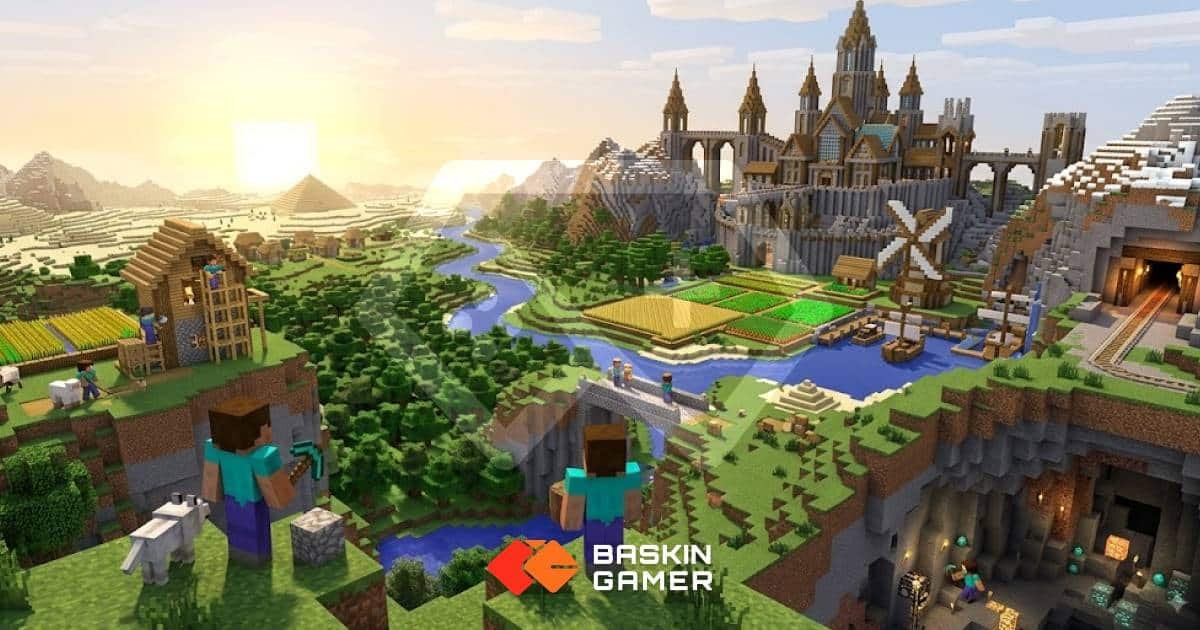
Build a village.
Start a farm.
Dig an enormous underground base.
Create a railway system that crosses your world.
Spend weeks designing a castle that serves absolutely no practical purpose.
That’s the trick.
Minecraft gives you goals without forcing you to follow them.
A game with a traditional campaign eventually reaches a point where the story says, “You’re done.”
Minecraft doesn’t.
The world simply waits for your next idea.
The Simplicity Is Actually the Secret
Minecraft looks simple.
Blocks. Trees. Caves. Animals. Tools.
Yet those simple pieces can be combined almost endlessly.
A block isn’t just a block when the player decides what to do with it.
Wood becomes a house.
A house becomes a village.
A village becomes part of a larger world.
And suddenly the player isn’t following content anymore. They’re creating it.
That’s a very different relationship with a game.
Minecraft doesn’t always need to give you something new to do because it gives you enough tools to invent something yourself.
Updates Help, But They Aren’t the Whole Reason
Minecraft still receives new content regularly. The game’s current model uses multiple game drops throughout the year rather than relying only on one huge annual update.
That matters.
New blocks give builders another reason to experiment, new mobs create different stories, and new biomes change exploration. Technical improvements can make older worlds feel better.
But updates alone don’t explain Minecraft’s longevity.
Plenty of games receive updates.
Most don’t last like this.
Minecraft’s updates work because they are added to a foundation that already works. A player can ignore a new feature and still enjoy the game exactly as before.
That’s important.
The game evolves without completely replacing itself.
Minecraft Has Something Most Live-Service Games Don’t
Most live-service games want you to keep up.
Minecraft doesn’t really care.
- You can play the newest version.
- You can return to an old world.
- You can start a completely fresh survival run.
- You can play alone.
- You can play with friends.
- You can build something massive.
Or you can spend twenty minutes underground looking for diamonds and call it a successful evening.
There isn’t one correct way to play.
That flexibility gives Minecraft an advantage that is difficult to copy.
The Community Keeps Creating New Minecraft
This is where Minecraft’s lifespan gets even more interesting.
Mojang can add new features, but the community constantly finds new ways to use them.
Players create enormous builds, survival challenges, adventure maps, servers, mods, resource packs, farms, technical projects, and bizarre experiments that nobody at the studio could have planned individually.
The result is a game that keeps generating its own content.
That’s a powerful loop.
Someone watches a Minecraft build.
They want to try it.
Then they create something different.
Someone else sees that.
And suddenly a game released years ago is still producing new ideas.
Minecraft Can Also Grow With the Player
A child can discover Minecraft by building a dirt house.
A few years later, that same player might be designing elaborate redstone machines.
Later still, they might run a server, experiment with mods, build enormous structures, or return simply because they miss the world they created years ago.
The game doesn’t demand that players stay at one skill level.
It grows with them.
That’s another reason the nostalgia around Minecraft is so strong. You’re not just remembering a game.
You’re remembering what you built inside it.
Even the Technology Is Catching Up
Minecraft’s visual identity has remained recognizable, but that doesn’t mean the technology around it has stopped moving.
Vibrant Visuals, released for Bedrock Edition in 2025, brought a significant visual upgrade with features such as improved lighting, fog, and water effects. Mojang is also working on bringing it to Java Edition.
And in 2026, Minecraft is still expanding its platform reach, including a native version announced for Nintendo Switch 2.
That’s an important detail.
Minecraft doesn’t need to abandon its identity to modernize.
It can improve the technology underneath while keeping the basic idea intact.
So, When Does Minecraft Actually Expire?
Honestly?
It’s difficult to see a normal expiration date.
Minecraft would have to lose the things that make it fundamentally different.
The freedom.
The creativity.
The community.
The ability to create something that didn’t exist before you opened the game.
As long as those elements remain, Minecraft has something many games eventually lose: a reason to come back even when there is nothing you need to finish.
That’s a much stronger form of longevity than simply having new content.
The Real Reason Minecraft Keeps Surviving
Minecraft isn’t still popular because every update is perfect.
It isn’t because every player is chasing the newest feature.
And it certainly isn’t because the game has somehow remained unchanged.
It’s because Minecraft doesn’t tell you what your experience has to be.
That was true years ago.
It’s still true today.
And it could remain true years from now.
A new player can open Minecraft tomorrow and have an experience completely different from someone who has played for fifteen years.
That is the closest thing Minecraft has to an expiration-proof design.
The blocks are simple.
The possibilities aren’t.
Final Take
Minecraft doesn’t need to reinvent itself every year.
It only needs to keep giving players reasons to create.
New updates can help. Better visuals can help. New platforms can help. Community content certainly helps.
But the foundation is what matters.
Minecraft gives players a world and then gets out of the way.
That’s why someone can leave it for years, return, place a block, and immediately know what to do next.
Maybe that’s why Minecraft has no real expiration date.
It was never built around finishing the game.
It was built around deciding what comes next.
FAQ
Why is Minecraft still popular after so many years?
Minecraft combines exploration, survival, creativity, multiplayer, and player-created content without forcing players into one specific way of playing. Its regular updates also continue expanding the game.
Is Minecraft still being updated in 2026?
Yes. Minecraft continues receiving new game drops, updates, technical improvements, and platform-related developments in 2026.
Can Minecraft ever become outdated?
It can become less popular if player interest changes, but its sandbox structure gives it unusual longevity. The ability to create and play in different ways makes it less dependent on a single gameplay loop.
Is Minecraft still worth playing in 2026?
For players who enjoy creativity, exploration, survival, building, or open-ended gameplay, Minecraft remains one of the easiest games to return to without needing to catch up on years of story or progression.
Why doesn’t Minecraft get boring?
Minecraft doesn’t have one fixed path. Players can build, explore, automate, fight, create, play multiplayer, experiment with community content, or simply start another survival world. The experience changes depending on what the player decides to do.
Stay tuned to Baskin Gamer as we bring you the latest updates on game news, releases, and more