
For years, India’s gaming hardware conversation has mostly been about products arriving from somewhere else.
Consoles, PC handhelds, graphics cards and gaming accessories are usually designed and developed by companies based outside the country before eventually reaching Indian players.
The ARC X1 changes the nature of that conversation.
ARC, an Indian gaming company, is developing a dedicated handheld built around Qualcomm’s Snapdragon G2 Gen 2 Gaming Platform, alongside its own Android-based gaming operating system, OwlOS.
That doesn’t make the X1 a finished success story. It isn’t evidence that India has suddenly established a major domestic console industry either.
What it does provide is something more concrete: an Indian company is attempting to build both the gaming hardware and the software environment around it.
That makes the X1 worth watching.
Quick Summary
- ARC X1 is a portable gaming handheld being developed by Indian company ARC.
- It uses Qualcomm’s Snapdragon G2 Gen 2 Gaming Platform.
- OwlOS is ARC’s Android-based operating system designed around gaming.
- The device has a 7-inch 1920 × 1080 display with a 120Hz refresh rate.
- It includes 8GB LPDDR5X RAM and 128GB UFS 3.1 storage.
- MicroSDXC expansion is supported.
- ARC uses TMR analog sticks and Hall-effect triggers.
- The handheld has a 9,300mAh battery and active cooling.
- OwlOS supports native Android gaming, cloud gaming and remote play.
- ARC currently lists Q1 2027 as the delivery target for its first batch.
An Indian Company Is Building the Hardware
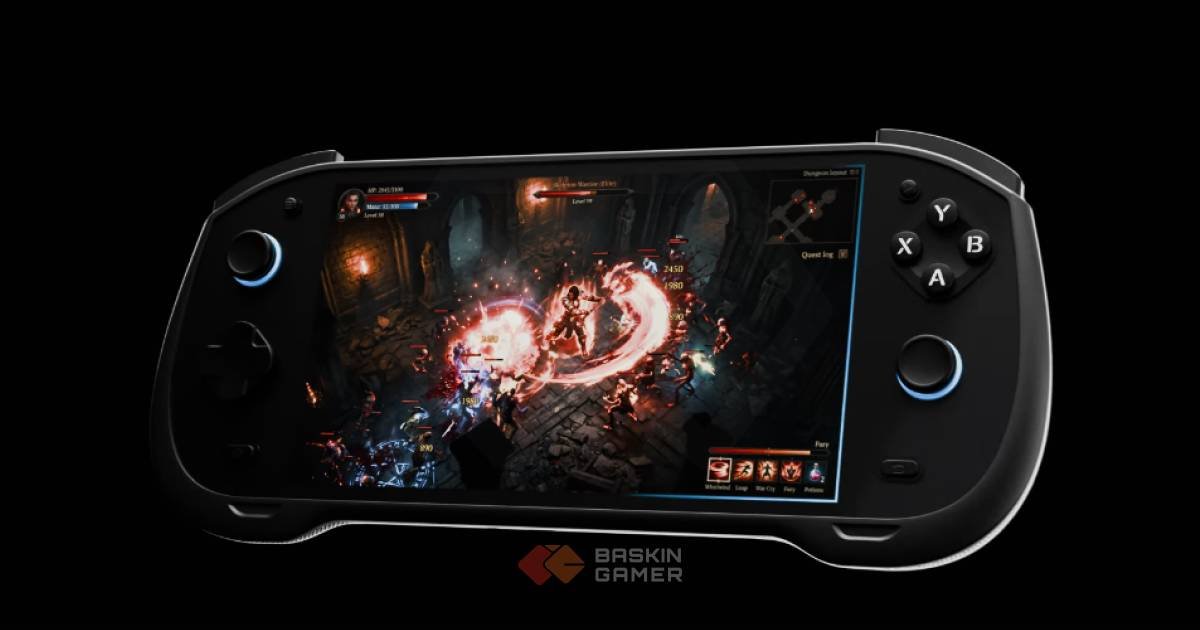
The ARC X1 isn’t being presented as a smartphone that happens to have physical controls.
It has been designed as a dedicated handheld from the beginning.
That difference shows up immediately in the hardware. There is a 7-inch landscape display in the centre, physical controls on both sides, rear programmable buttons and an active cooling system built around sustained gaming workloads.
ARC says development took 16 months and included input from its gaming community.
Qualcomm is also part of the project, with the X1 using its Snapdragon G2 Gen 2 Gaming Platform.
For ARC, that puts the company into a part of the gaming industry where hardware decisions and software decisions have to work together.
And that’s where OwlOS comes in.
OwlOS Is What Makes the X1 Different
Android already powers countless gaming devices.
ARC isn’t trying to replace Android. Instead, OwlOS is built on the Android Open Source Project and adds a gaming-focused layer around it.
The idea is fairly straightforward.
A handheld shouldn’t behave exactly like a phone.
Games need physical controls. Different titles may need different button layouts. Performance can change depending on the workload. Players may want to adjust fan behaviour, frame rates or resolution without digging through several system menus.
OwlOS brings those functions into the handheld’s gaming environment.
ARC lists features including game profiles, controller remapping, FPS monitoring, resolution scaling, fan controls, Quick Resume, OTA updates and a unified game library.
Cloud gaming and remote play are also part of the platform.
Whether that software approach remains useful over several years will depend on updates, compatibility and support after the hardware reaches players. Those are questions the current specifications cannot answer.
Snapdragon G2 Gen 2 Handles the Core Hardware
Underneath OwlOS sits Qualcomm’s Snapdragon G2 Gen 2 Gaming Platform.
ARC lists an eight-core Kryo CPU and Adreno A22 GPU, built on a 4nm process.
Memory comes in at 8GB LPDDR5X, while storage starts at 128GB UFS 3.1.
There’s also a microSDXC slot for additional storage.
Those numbers establish the basic hardware configuration, but they don’t tell the whole story.
Gaming performance isn’t determined by a processor name alone. Resolution, thermal behaviour, game optimization, power settings and software support can all affect what a player actually sees on the screen.
That is why real-world testing will matter once the X1 is in users’ hands.
A 120Hz Screen for a Portable Device
The display measures 7 inches and runs at 1920 × 1080 resolution.
ARC lists a 120Hz refresh rate, 500 nits of typical brightness and Gorilla Glass 3 protection.
A high refresh rate doesn’t automatically make every game run at 120 frames per second. The game and hardware still have to produce those frames.
What it does provide is room for smoother motion in applications capable of taking advantage of the higher refresh rate.
For an Android-based handheld, that can be useful across games with different performance requirements.
ARC Has Put a Lot of Attention Into the Controls
The controls are one of the clearest signs that the X1 is being designed around gaming rather than general mobile use.
ARC uses TMR analog sticks and Hall-effect triggers.
There are also mechanical trigger locks, programmable rear buttons, a D-pad, ABXY controls and motion sensing.
TMR stands for Tunnel Magnetoresistance. Like other magnetic sensing approaches, it measures movement without relying on the same contact mechanism used by traditional potentiometer-based sticks.
ARC has also included system-level calibration and per-game control mapping.
That could prove useful for a device expected to run different types of games. A touchscreen-heavy Android title, a controller-native game and a remotely streamed PC game can all have different control requirements.
The software has to account for that variety.
Cooling Matters More Than It Looks
Portable hardware has an awkward balancing act.
More performance generally means more heat. More cooling can mean more size, weight or noise.
ARC has opted for active cooling in the X1.
The system uses a copper heatsink and centrifugal fan, with air entering through the rear and leaving through the top of the device.
The company lists the X1 at 450 grams and uses a polycarbonate body with textured grips.
None of that tells us how loud the fan will be during demanding games or how temperatures will behave over long sessions.
Those are real-world questions.
Still, the presence of active cooling shows that sustained performance is part of the hardware design rather than an afterthought.
A 9,300mAh Battery
Battery capacity is another notable part of the X1.
ARC lists a 9,300mAh battery with support for up to 27W USB-PD charging.
The company also states that the device can deliver more than eight hours of gameplay.
That figure needs context.
Battery life depends heavily on what the handheld is doing. A lightweight Android game, demanding 3D title and cloud-streaming session can place very different loads on the system.
Screen brightness, wireless connectivity and performance settings matter too.
So the 9,300mAh figure is useful as a hardware specification, while the actual endurance will need to be established through normal use.
One Handheld, Several Ways to Play
ARC isn’t limiting the X1 to games installed directly on the device.
OwlOS is designed around three broad forms of gaming.
Native gaming runs directly on the handheld.
Cloud gaming moves the game processing to remote servers and streams the result to the device.
Remote play allows compatible PCs or consoles to send gameplay to the X1.
That approach fits naturally with a portable device.
The handheld doesn’t necessarily need to run every game locally to become useful for different types of players.
At the same time, cloud and remote play depend on external factors such as network quality, latency and service compatibility.
So they expand the possible uses of the device without eliminating those dependencies.
The X1 Is Also Designed With Replaceable Components
ARC’s current specifications list several replaceable parts, including the battery and joysticks.
The company also describes modular daughterboards and says spare parts will be made available.
That could become relevant over the life of the handheld.
Portable gaming devices experience physical wear differently from stationary hardware. Analog sticks, buttons, batteries and ports are all components that can eventually require attention.
How easy the X1 is to maintain in practice will depend on the availability of those parts and the actual repair process once the device has been in circulation.
For now, ARC’s stated hardware design provides the starting point.
Why This Matters for Indian Gaming
The significance of the ARC X1 isn’t that it suddenly changes the global handheld market.
There is no evidence for that yet.
Its significance is narrower.
An Indian company is developing a gaming handheld while also developing the software environment that runs on it.
That’s a different position from simply importing an existing device and selling it in India.
ARC is working across several layers:
Hardware.
Operating system.
Controller design.
Performance management.
Game access.
That creates more responsibility for the company, but it also gives ARC greater control over how those pieces fit together.
Whether that approach works will depend on what happens after launch.
The Questions That Matter Now
A specification sheet can tell us a lot about the X1.
It can’t tell us everything.
Players will eventually want answers to questions such as:
- How well does OwlOS handle different Android games?
- How frequently will software updates arrive?
- How stable are the performance profiles?
- How does the cooling system behave during long sessions?
- How durable are the TMR sticks and triggers?
- How easy are replacement parts to obtain?
- How quickly does ARC respond to software problems?
- How broad is compatibility with cloud and remote-play services?
Those aren’t criticisms.
They’re simply the normal questions that emerge when a new hardware platform moves from development into the hands of users.
ARC currently lists Q1 2027 as the delivery target for the first batch.
That means many of those answers are still ahead of us.
India’s Gaming Hardware Story Is Changing Slowly
One company doesn’t create an entire hardware industry.
The ARC X1 shouldn’t be treated as proof that India is about to become a major global console manufacturer.
But it does represent a tangible development.
An Indian company is designing a dedicated gaming handheld and building a gaming-focused software layer around it.
That’s enough to make the project notable.
The next step is execution.
Hardware needs to work reliably. Software needs to mature. Games need to run properly. Updates need to continue. Users need to decide whether the overall experience works for them.
Those things cannot be established through a launch specification sheet.
They have to happen over time.
What the ARC X1 Represents
The X1 brings together several pieces that are usually discussed separately: Qualcomm’s gaming platform, dedicated controls, a 120Hz display, active cooling, a large battery and an Android-based gaming operating system.
But the bigger story sits behind those specifications.
ARC is attempting to build a gaming platform from India rather than simply bringing an existing platform into the country.
How significant that becomes will depend on the product’s execution, software support and response from players.
For now, the ARC X1 is best understood as an Indian-developed gaming hardware project entering the portable gaming market.
And that alone makes it worth following.
ARC X1 Frequently Asked Questions
What is the ARC X1?
The ARC X1 is a portable gaming handheld developed by Indian gaming company ARC. It uses Qualcomm’s Snapdragon G2 Gen 2 Gaming Platform and runs OwlOS, an Android-based gaming operating system.
What is OwlOS?
OwlOS is ARC’s gaming-focused operating system built on the Android Open Source Project. It adds features such as controller mapping, game profiles, performance controls, Quick Resume and access to native, cloud and remote-play gaming.
What processor does the ARC X1 use?
The X1 uses Qualcomm’s Snapdragon G2 Gen 2 Gaming Platform, with an eight-core Kryo CPU and Adreno A22 GPU.
How much RAM does the ARC X1 have?
The device has 8GB LPDDR5X RAM.
How much storage does it have?
ARC lists 128GB UFS 3.1 storage, with microSDXC expansion supported.
What size is the ARC X1 display?
The handheld has a 7-inch 1920 × 1080 display with a 120Hz refresh rate.
Does the ARC X1 support cloud gaming?
Yes. Cloud gaming and remote play are both included in ARC’s stated OwlOS capabilities.
When is the ARC X1 expected to ship?
ARC currently lists Q1 2027 as the delivery target for its first batch.
Final Thoughts
The ARC X1 isn’t a finished chapter in India’s gaming hardware story.
It’s an early one.
What makes it notable is the combination of hardware and software development happening under the same project. ARC isn’t only putting physical controls around an existing mobile platform; it is also building OwlOS around the way it expects people to use the handheld.
Whether that approach develops into a lasting platform will take time to determine.
For now, the X1 gives India’s gaming industry something concrete to watch:
an Indian company building a dedicated gaming handheld from the hardware up.
Stay tuned to Baskin Gamer as we bring you the latest updates on game news, releases, and more