
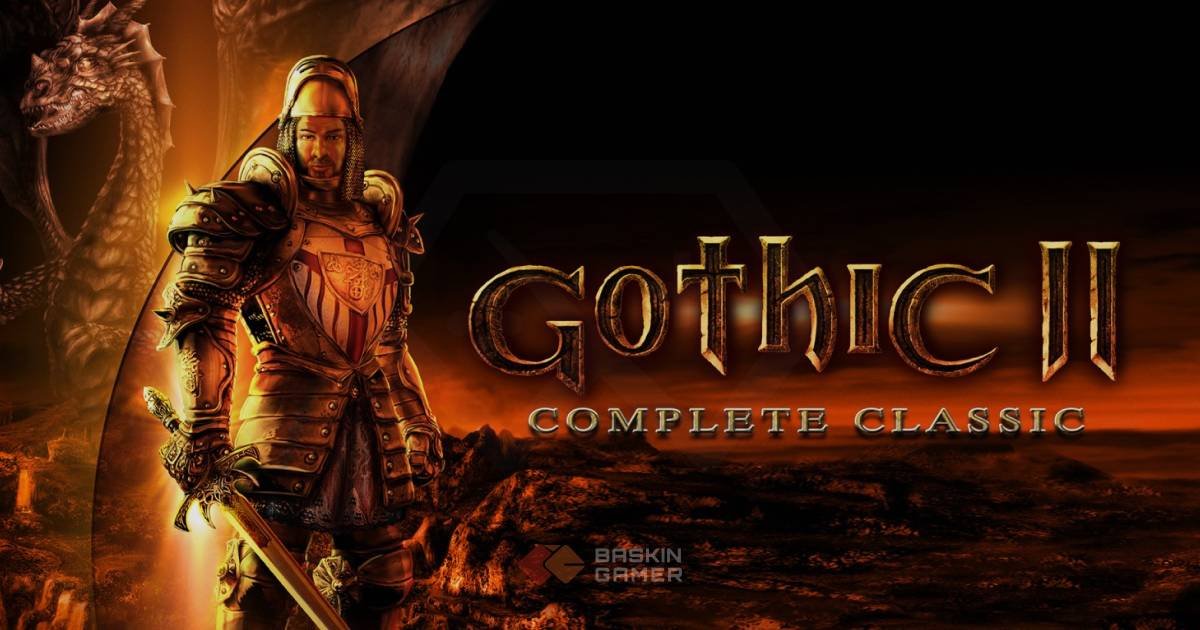
Gothic II Complete Classic does not waste much time telling you that you’re in danger.
It simply lets you walk into the forest, meet something much stronger than you, and learn the lesson yourself.
That old-school attitude is a big part of what makes Gothic II different from many modern RPGs. The world does not constantly point toward the next objective. Characters have their own routines. Quests can be approached in different ways. Your choice of guild changes the skills available to you and the people you deal with.
And early on, even a fight that looks harmless can go badly.
Gothic II Complete Classic arrives on PlayStation and Xbox consoles on September 29, 2026, bringing Gothic II together with its Night of the Raven expansion. The game includes more than 100 quests, over 50 hours of gameplay, more than 500 characters and more than 200 weapons and spells.
If you’re playing it for the first time, don’t approach it like a modern RPG.
Learn the world first.
Then learn how to survive in it.
Quick Summary
- Save regularly, and keep more than one save slot.
- Don’t assume every enemy is meant to be fought immediately.
- Think carefully before choosing one of the three guilds.
- Spend character-development resources with a plan.
- Explore, but learn which areas are safe for your current strength.
- Talk to people more than once and pay attention to what they tell you.
- Keep unusual items instead of selling everything immediately.
- Read quests carefully because solutions are not always presented as simple objectives.
- Learn enemy attack patterns instead of relying on button mashing.
- Accept that Gothic II expects you to experiment and remember things.
1. Save Often — And Keep Several Saves
This is probably the easiest habit to develop and one of the most useful.
Save before doing something important.
Entering an unfamiliar area? Save.
Starting a quest that could affect your relationships? Save.
About to speak to someone important? Save.
Thinking about fighting an enemy that looks suspiciously powerful? Definitely save.
The reason is simple: Gothic II does not always protect you from your own decisions.
A bad conversation can close off an option.
A difficult fight can turn into a quick death.
An exploration trip can take you much farther from safety than expected.
Keeping several separate saves is even better than relying on one.
Don’t overwrite your only save every time. Keep an earlier point you can return to if something goes badly.
That little bit of discipline can save you from replaying a large section of the game.
2. Not Everything Wants to Be Fought Yet
One of the biggest mistakes a new player can make is assuming that every enemy in sight exists for the player to defeat immediately.
It doesn’t.
You will encounter creatures that are simply too dangerous for your current character.
When that happens, running away is a valid strategy.
Modern RPGs often communicate progression through obvious level requirements, enemy markers or carefully controlled encounters.
Gothic II is much less interested in holding your hand.
You might see an interesting path through the wilderness and discover that something living there can destroy you in seconds.
Remember where it is.
Come back later.
That creature hasn’t gone anywhere.
3. Choose Your Guild Carefully
Your guild is one of the most important decisions you will make.
Gothic II Complete Classic offers three character guilds, each with different allies, enemies and skills that can be developed through training.
The three paths are:
- Militia / Paladins
- Mercenaries
- Fire Mages
Your choice isn’t simply a cosmetic faction decision.
It affects how your character develops and changes your relationship with the world around you.
The Mercenary route leans naturally toward physical combat.
The Paladin path provides a broader mix of combat and magical possibilities.
The Fire Mage route is built around magic and requires a different approach to progression.
None of these choices needs to be treated as the universally correct answer.
Instead, ask yourself how you actually want to play.
Want to spend most of your time fighting with weapons?
A martial path makes sense.
Prefer a character built around spells and magical progression?
The mage route is the obvious direction.
The important part is understanding that your guild choice has consequences before committing to it.
4. Don’t Spend Your Progression Resources Without a Plan
Character development in Gothic II can punish careless spending.
You will earn resources that can be used to improve attributes and abilities, but you don’t have an unlimited supply that makes every decision irrelevant.
That means you should have at least a rough idea of what kind of character you’re building.
A player who wants a strong melee character should not scatter improvements across every available skill.
Likewise, someone interested in magic should not spend everything on unrelated combat abilities simply because they are available.
You don’t need a perfect character plan before starting.
You do need a direction.
Think about the kind of weapons or abilities you want to rely on, then make your training choices support that idea.
A few poor decisions early on can make later progression more awkward than it needs to be.
5. Explore — But Don’t Empty Your Inventory
Exploration is one of Gothic II’s greatest strengths.
The world is filled with characters, locations, enemies and objects that don’t necessarily exist simply to push the main story forward.
That makes wandering worthwhile.
You might discover a hidden route.
You might meet someone who knows something useful.
You might find an item before you even understand why it matters.
The problem is that a new player can easily go too far.
Exploring doesn’t mean sprinting toward every unexplored corner of the map.
Take note of what you find.
If an area contains enemies you clearly cannot handle, mark it mentally and leave.
Then there is your inventory.
Don’t sell every unusual object just because it currently looks worthless.
Some items can have uses beyond their immediate value, particularly in a game where quests and NPC interactions are less predictable than in modern RPGs.
If you’re unsure about something, keeping it for a while is often safer than discovering later that you needed it.
6. Talk to People — Really Talk to Them
Khorinis is not populated by cardboard quest markers.
The game’s official description highlights more than 500 individual characters, each with their own daily routines.
That detail tells you something important about how the world works.
People aren’t simply standing around waiting for the player.
They have places to be.
They have relationships.
They know different things.
And they may react differently depending on what you’ve already done.
Talk to people.
Then talk to them again when circumstances change.
Pay attention to names.
Remember locations.
If someone tells you that another person knows something, don’t immediately forget it because the game didn’t put a giant marker on your screen.
A lot of Gothic II‘s satisfaction comes from remembering information and using it later.
7. Read Quests Instead of Chasing Markers
This is another area where Gothic II feels very different from modern RPGs.
The game supports multiple ways of completing quests, which gives the world more flexibility and makes your decisions matter.
A quest isn’t always:
Go here → defeat enemy → collect item → return.
Sometimes the important part is figuring out what the person actually wants.
Maybe someone gives you a piece of information rather than a location.
Maybe another character can help.
Maybe there is a less violent solution.
Maybe the person who gave you the quest isn’t telling you everything.
Read the dialogue.
Remember what NPCs say.
If you find yourself thinking, “Where am I supposed to go now?”, go back through what the characters actually told you.
The answer may already be there.
8. Learn When an Area Is Too Dangerous
There is a difference between exploration and walking into a death trap.
The world doesn’t always make that difference obvious.
Pay attention to enemy behavior.
A creature that kills you almost instantly is giving you useful information.
You’re probably not ready.
Don’t interpret that as failure.
Gothic II is built around becoming stronger and returning to places that were previously dangerous.
You can turn an impossible fight into an easy one simply by coming back later with better equipment, stronger abilities and more experience.
This also makes the world feel more believable.
Not every forest path exists for your current level.
Not every ruin is supposed to be conquered immediately.
Sometimes the smartest thing you can do is remember where something is and leave.
9. Learn Combat Instead of Button Mashing
Combat in Gothic II can feel unusual if you’re coming from modern action RPGs.
Give yourself time to understand it.
Don’t rush into every fight pressing attacks as quickly as possible.
Watch the enemy.
Learn its attack rhythm.
Understand when you have an opening.
Then attack.
Early enemies are actually useful teachers because they give you opportunities to learn without requiring the complex builds and equipment you’ll eventually have.
Movement matters.
Timing matters.
Positioning matters.
So does knowing when to stop attacking.
A fight that looks easy can turn ugly if you become too aggressive and leave yourself unable to respond.
Once the combat system begins to click, encounters that initially felt awkward become much easier to read.
10. Accept That Gothic II Doesn’t Explain Everything
This might be the most important tip on the list.
Don’t expect Gothic II to behave like a 2026 RPG.
Modern games are extremely good at onboarding.
They explain mechanics.
They highlight objectives.
They show you where to go.
They remind you about unfinished quests.
They often tell you what is important before you have to figure it out yourself.
Gothic II is comfortable leaving some of that work to you.
Its world expects curiosity.
Its quests expect attention.
Its progression expects planning.
Its combat expects practice.
And its exploration expects you to remember what you’ve learned.
At first, that can feel frustrating.
Then something changes.
You stop waiting for the game to tell you everything.
You start recognizing places.
You remember which character said what.
You notice that a path you couldn’t safely travel earlier is now manageable.
You begin making decisions based on knowledge rather than instructions.
That’s when Gothic II starts making sense.
What Should You Do First in Gothic II?
If you’re starting Gothic II Complete Classic for the first time, don’t worry about building the perfect character during the opening hours.
Give yourself a simpler set of goals.
First, learn the area around you.
Find out where the important people are and which routes are safe.
Next, start building relationships.
Talk to characters and pay attention to what they ask from you.
Then, learn the combat system.
Fight manageable enemies and use those encounters to understand timing and movement.
After that, start thinking about your guild.
Your decision will shape the direction of the character you are building.
Finally, begin exploring more aggressively once your character has the skills and equipment to survive it.
There’s no need to rush.
The world will still be there.
Should You Play Gothic II Before Gothic?
You don’t have to.
The official description presents Gothic II as a continuation of the first game’s story while also stating that it can be enjoyed by players who haven’t experienced the original.
If you’re completely new to the series, some characters and events may carry more meaning if you’ve played Gothic first.
But you don’t need to treat the original game as homework.
Start Gothic II if that’s the game you want to play.
Pay attention to the story.
Ask questions when something isn’t clear.
The world will gradually fill in the gaps.
5 Beginner Mistakes to Avoid
Spending every progression point immediately
Don’t upgrade something just because you can. Have a direction in mind.
Fighting enemies far above your strength
If something destroys you instantly, leave and return later.
Selling everything you don’t recognize
Unusual items may become useful later. Keep questionable items until you understand their purpose.
Ignoring NPC dialogue
Important information is often delivered through conversations rather than obvious objective markers.
Trying to discover everything immediately
You are not supposed to conquer the entire map during your first few hours.
Let the world unfold.
Gothic II Rewards Patience
The hardest part of Gothic II Complete Classic for a new player may not be the combat.
It may be changing your expectations.
This is an RPG that doesn’t always tell you when you’re ready.
It doesn’t necessarily point at the safest road.
It gives you a world and expects you to figure out how that world works.
That can make the opening hours feel rough.
It can also make the discoveries feel much more personal.
When you finally beat an enemy that forced you to run away earlier, the game doesn’t need to announce your achievement.
You remember.
When you finally understand why a character sent you somewhere, you remember that too.
And when you walk into a place that once terrified you and realize you’re now strong enough to handle it, the progression feels earned.
That’s the experience new players should look for in Gothic II.
Don’t try to master everything on the first day.
Learn the world. Build your character. Remember what people tell you.
Then let Khorinis surprise you.
FAQ
Is Gothic II Complete Classic good for beginners?
It can be, but new players should expect an old-school RPG design. The game provides less hand-holding than many modern RPGs and rewards exploration, experimentation and paying attention to NPC dialogue.
How many guilds are there in Gothic II?
There are three main character guilds: the Militia/Paladins, Mercenaries and Fire Mages. Each provides different allies, enemies and training opportunities.
Should I choose my guild immediately?
Don’t rush the decision. Spend some time learning about the available paths and think about the combat style you want before committing.
Should I fight every enemy I see?
No. Some enemies are intentionally beyond your current strength. Returning later with better equipment and abilities is an important part of the experience.
Should I sell everything I find?
No. Keep unusual or uncertain items until you know whether they have another purpose.
Does Gothic II have quest markers?
Its quest design is much less dependent on modern objective-marker systems. Paying attention to conversations and remembering locations is an important part of solving quests.
Do I need to play Gothic first?
No. The official description says Gothic II can be enjoyed by players who have not played the original, although returning players may naturally recognize more of the story and world.
How long is Gothic II Complete Classic?
The official PlayStation listing describes the game as offering more than 50 hours of gameplay, alongside more than 100 quests. Actual playtime depends heavily on exploration and how much optional content you pursue.
Final Thoughts
Gothic II Complete Classic is arriving on modern consoles, but it hasn’t suddenly become a modern RPG.
That’s a good thing.
The game still asks you to pay attention.
It wants you to remember names. It wants you to explore carefully. It wants you to think before spending your progression resources. It wants you to accept that some fights are better left for later.
Most importantly, it gives you room to figure things out.
If you’re coming to Gothic II for the first time, don’t worry about playing perfectly.
Play curiously.
The world is going to teach you the rest.