
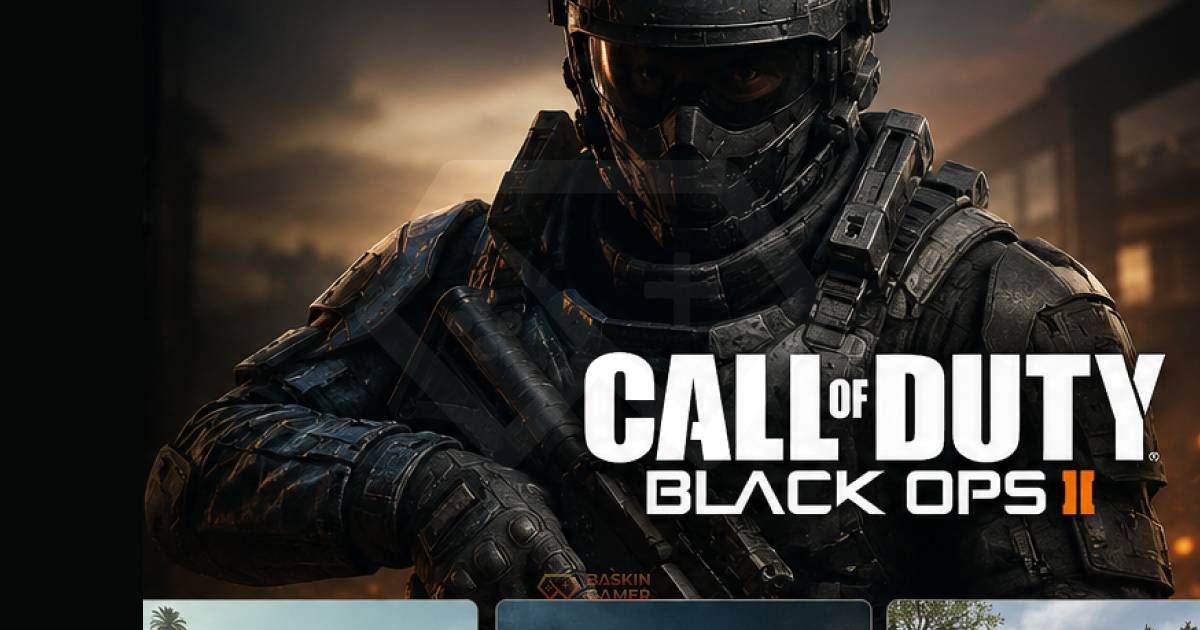
Whenever an old game starts trending again, somebody eventually says the same thing.
“It’s just nostalgia.”
Most of the time, that’s probably true.
People tend to remember the best parts of older games and conveniently forget the frustrations. A decade passes, memories soften, and suddenly every game from the past feels better than it actually was.
That’s why Black Ops 2 fascinates me.
Because I don’t think nostalgia fully explains what’s happening here.
If nostalgia were the entire reason, players would talk about dozens of old shooters the same way they talk about Black Ops 2. But they don’t. Most games have their moment, fade into the background, and become occasional memories. Black Ops 2 somehow escaped that fate.
Fourteen years later, people are still bringing it up whenever a new Call of Duty launches.
That’s unusual.
Most Games Get Replaced
The gaming industry moves quickly.
One year you’re playing the biggest shooter on the planet. Two years later another game arrives, the player base shifts, and the conversation moves on. It happens constantly.
Think about how many multiplayer shooters have come and gone over the last decade.
Some were huge at launch, some sold millions of copies, and some dominated social media for months. For a while, they felt impossible to ignore.
Then people moved on. That’s normal. Gaming moves fast, and most multiplayer communities eventually drift toward whatever comes next.
What’s unusual is when a game refuses to disappear from the conversation.
Black Ops 2 feels like one of those games. Not because people still play it every day, but because people still compare new shooters against it. Every time a Call of Duty launches, somebody inevitably brings up Black Ops 2 as the benchmark.
At some point, that stops being nostalgia and starts becoming reputation.
The Maps Had Personality
One thing I’ve noticed whenever people talk about Black Ops 2 is how quickly they start naming maps.
Not describing them.
Naming them.
Raid.
Hijacked.
Standoff.
Express.
The names alone are enough.
Players immediately start remembering moments tied to those maps. A ridiculous comeback. A sniper duel that shouldn’t have worked. Hours spent learning every angle with friends after school.
That’s harder to achieve than it sounds.
Most multiplayer maps do their job and disappear from memory a few years later. Black Ops 2’s maps became part of the stories players told each other. That’s why they survived.
People rarely remember layouts.
They remember experiences.
The Game Arrived At The Right Time
The more I think about it, the more I believe timing played a huge role in Black Ops 2’s legacy.
It launched before battle passes became standard. Before seasonal roadmaps dominated conversations. Before every multiplayer game started feeling like a long-term commitment.
That doesn’t mean modern shooters are worse.
They’re not.
There are things modern games do far better than Black Ops 2 ever could. Cross-play, accessibility features, improved server infrastructure, and regular content updates have genuinely improved multiplayer gaming.
But something else changed along the way.
The relationship between players and games became more demanding.
Today it often feels like every game wants your attention every day. There’s always another challenge, another reward track, another event ending in forty-eight hours.
Black Ops 2 came from a period when simply playing the game was enough.
Looking back, I think that’s something many players miss more than they realize.
Then There Was Zombies
What’s funny is that some people don’t even bring up multiplayer first when discussing Black Ops 2.
They talk about Zombies.
And honestly, that’s part of what makes the game special.
For one group of players, Black Ops 2 was all about Raid, Standoff, and competitive matches.
For another group, it was Origins, Mob of the Dead, Easter eggs, and late-night survival runs that somehow lasted until sunrise.
Most games become known for one thing.
Black Ops 2 became known for several.
That’s much harder to pull off.
Even today, it’s common to see debates about the best Zombies maps ever made, and Black Ops 2 usually finds itself somewhere near the center of the discussion.
Not many games stay relevant across multiple communities for this long.
Why The PlayStation Release Feels Bigger Than A Port
The upcoming PlayStation release matters for an obvious reason.
A lot of players simply haven’t had easy access to these games for years.
Xbox users benefited from backward compatibility. PC players always had options. PlayStation players largely watched from the sidelines whenever discussions about Black Ops 2 resurfaced.
Now that changes.
But I also think the release creates something else.
A test.
A chance to see whether Black Ops 2’s reputation still holds up when new players experience it for the first time and older players return without the filter of memory.
Because eventually nostalgia runs out.
Good memories can convince somebody to reinstall a game.
They can’t force somebody to keep playing it.
Final Thoughts
Maybe that’s why Black Ops 2 still matters.
Not because it was perfect. It wasn’t.
Not because every Call of Duty since then has failed. Plenty of great games came after it.
It matters because the conversation never really stopped.
Every generation of shooters seems to produce one game that becomes the reference point everyone returns to. The game people compare things against years later.
For a surprising number of players, Black Ops 2 became that game.
And the fact we’re still debating its legacy in 2026 probably says more about its impact than any review score ever could.
Stay tuned to Baskin Gamer as we bring you the latest updates on game news, releases, and more