
For years, the usual question was simple: What are you playing?
That question is becoming harder to answer.
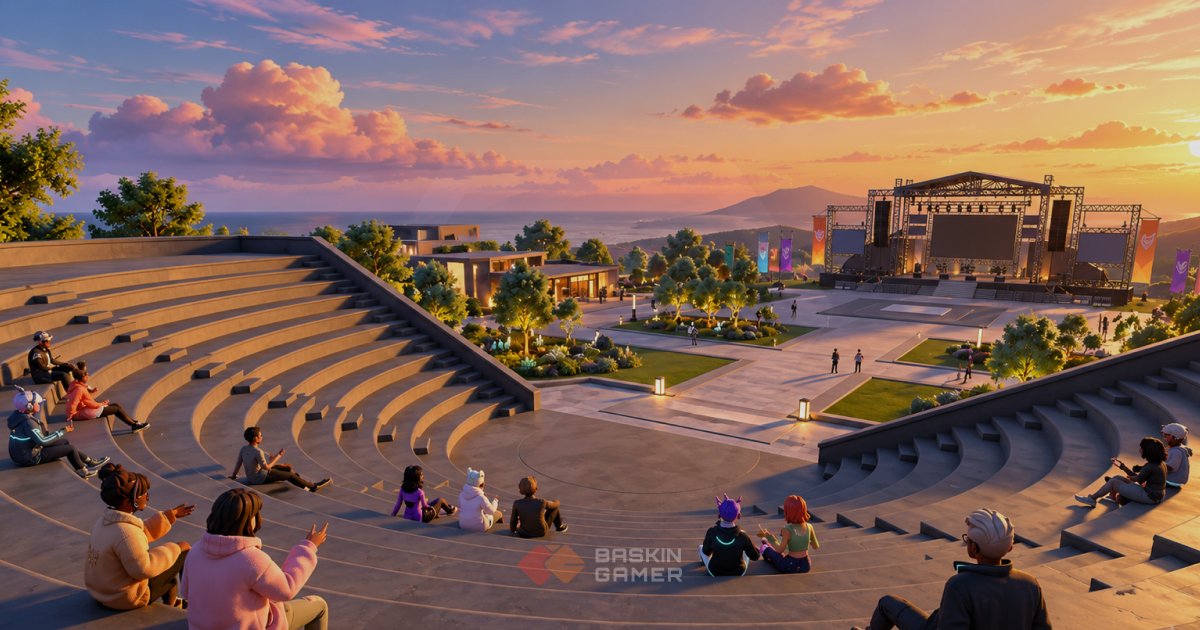
A player might enter a game to compete, spend an hour talking to friends, watch an event, explore a virtual space, meet someone new, and leave without really caring about the original objective.
The game was still running.
But playing was no longer the only reason to stay.
That shift is becoming easier to see in the latest research from Hub Entertainment Research. Its 2026 Gaming 360 survey found that younger players increasingly use games as places to communicate and build relationships, not simply as entertainment products. Among younger gamers surveyed, 57% said most or all communication with their gaming friends happens inside games, while 82% said they use in-game chat for conversations unrelated to gameplay.
Those numbers point toward something bigger than a change in multiplayer habits.
Games are starting to behave like social platforms.
Quick Summary
- Games are becoming places where people hang out, not just places where they compete.
- Voice and text chat increasingly continue beyond the actual game.
- Virtual events can give players reasons to log in even when they are not chasing progression.
- Creator communities have added another social layer around games.
- Free-to-play ecosystems make it easier for large groups to gather.
- Games now compete with social media, streaming and other entertainment for attention.
- Younger players are particularly comfortable treating games as social spaces.
- Fortnite, Roblox and similar platforms show how games can become destinations in their own right.
- The next generation of multiplayer games may be designed around communities as much as gameplay.
- That does not mean games will replace social media. It means the boundaries between the two are becoming less obvious.
From Multiplayer Games to Social Spaces
Multiplayer gaming has always involved other people.
That part is nothing new.
What has changed is what happens between the matches.
Early online multiplayer was often built around a fairly obvious loop. Find players, enter a match, compete, finish, leave and repeat.
Modern games can stretch that loop much further.
Players might remain in a shared world after completing an objective. They can explore together, customise characters, talk while travelling, attend an event or simply stand around while discussing something that has nothing to do with the game.
The activity itself becomes secondary.
A player does not necessarily need to be winning to have a reason to stay online.
That is an important distinction.
A traditional multiplayer game asks, Do you want to play?
A social gaming platform can ask something closer to, Do you want to join your friends?
Why People Stay When They Are Not Playing
This is probably the biggest change.
Think about a typical group of friends using a game as their meeting point.
One person might be actively playing. Another could be waiting for a match. Someone else might be changing their character. Another player may have stepped away from the screen.
They can still talk.
The game becomes the room around the conversation.
Hub’s latest research puts real numbers behind this behaviour. Forty-three percent of younger gamers surveyed said they had at least one gaming friend they had never met in person, while 40% of weekly gamers said they initially connected with someone through a game before developing a friendship.
That changes the value of a multiplayer environment.
A successful game does not necessarily need every person to be doing the same thing at the same time.
It needs to give people enough reasons to remain together.
Voice Chat Changed the Relationship With Games
Voice chat deserves more credit than it usually gets.
A game can provide the environment, but conversation turns that environment into a social space.
Friends can talk about school, work, sports, movies, relationships or completely unrelated nonsense while their characters are moving through a virtual world.
Hub found that 82% of younger gamers surveyed use in-game chat to discuss topics unrelated to gameplay.
That statistic matters because it removes one of the old assumptions about multiplayer gaming.
The conversation does not always exist because of the game.
Sometimes the game is simply where the conversation happens.
That is a very different role.
Games Are Becoming Entertainment Platforms
The biggest multiplayer games increasingly resemble entertainment platforms rather than traditional standalone products.
A game can contain competitive matches, social spaces, live events, creator content and collaborations within the same ecosystem.
Fortnite is an obvious example.
Roblox demonstrates another version of the same idea.
These platforms can host experiences that are not built around the traditional definition of a game. Players can attend events, explore user-created spaces and interact with entertainment brands without leaving the platform. Hub’s research specifically points to Fortnite and Roblox as destinations for branded experiences.
That creates an interesting reversal.
Games once borrowed ideas from other entertainment.
Now other entertainment is increasingly trying to enter games.
A film does not have to remain a film.
A television franchise does not have to remain on television.
An entertainment brand can build an experience inside a game and meet its audience there.
Events Give Players a Reason to Return
Live events are another piece of the puzzle.
A traditional game can be finished.
A social platform needs something happening tomorrow.
That difference helps explain why recurring events have become so important in modern gaming.
A concert, seasonal event, collaboration, tournament or limited-time experience gives players a reason to return even if they have already completed the game’s main content.
The event itself becomes part of the community conversation.
Players talk about it before it happens.
They experience it together.
Then they discuss what happened afterward.
The game has effectively created its own social calendar.
That is much closer to how social platforms operate than how traditional single-player games do.
Creators Added Another Layer
Gaming communities no longer exist only inside games.
They stretch across YouTube, Twitch, TikTok, Discord and other platforms.
A creator can turn a game into an ongoing conversation.
One player discovers a new strategy through a video. Another watches a livestream. Someone else joins a community discussion. Eventually they all return to the game.
The relationship works in both directions.
The game feeds the creator ecosystem.
The creator ecosystem sends attention back to the game.
That creates something traditional game launches rarely had: a community that can keep generating reasons to play after the initial release.
It also means the game itself is no longer the complete product experience.
The surrounding culture matters.
Why Younger Players Are Different
The generational difference is particularly interesting.
For someone who grew up with games as primarily single-player entertainment, the idea of spending an evening inside a virtual world without actually progressing may seem strange.
For younger players, it can feel completely normal.
Gaming, messaging, watching videos and socialising do not necessarily happen in separate places.
They overlap.
Earlier Hub research has also shown a broader generational shift in entertainment habits, with younger consumers giving gaming a much larger role alongside social media and digital video. LinkedIn
That does not mean every young player wants a virtual social life.
It means the distinction between gaming time and social time is becoming less rigid.
And game developers have noticed.
Free-to-Play Games Have an Advantage
Large social environments need large populations.
Free-to-play games have an obvious advantage here because the barrier to entering the world is lower.
Hub found that 88% of surveyed gamers play free-to-play titles. Among those players, 48% reported purchasing downloadable content.
The important point is not the spending figure.
It is the scale of the audience.
When millions of people can enter the same environment without purchasing the game upfront, the potential community becomes much larger.
That makes social features more valuable.
It also explains why publishers increasingly think about games as long-running ecosystems rather than products that peak around launch.
This Creates a New Problem for Developers
Making a game fun is still difficult.
Making a place where people want to spend time is different.
A social game needs systems that support conversation, identity, safety, moderation and community behaviour alongside gameplay.
That introduces problems traditional games could often avoid.
Toxic behaviour becomes more significant.
Harassment becomes a larger concern.
Moderation becomes part of the player experience.
Identity and privacy matter more.
As gaming communities grow, trust and safety become increasingly important because players are interacting with one another for longer periods and in more ways. Hive
A successful social game therefore cannot simply add a voice channel and call itself a platform.
The social environment has to work.
Games Are Also Competing With Social Media
This may be the most important part of the trend.
People have a limited amount of attention.
A teenager scrolling TikTok, watching YouTube, talking in Discord and playing Fortnite is not dividing their attention between completely separate worlds anymore.
Those activities can feed into each other.
A creator discusses an event.
A friend sends a clip.
Players log into the game.
The game creates something worth clipping.
Those clips spread across social media.
More people return to the game.
The cycle starts again.
Games and social media are therefore becoming competitors, partners and distribution channels at the same time.
That is a much more complicated relationship than simply saying one is replacing the other.
Could Games Become the Next Major Social Platform?
Probably not in the sense of replacing every existing social network.
People will still use messaging apps.
They will still watch short-form video.
They will still use traditional social networks.
But games can occupy a different position.
A social network primarily asks you to communicate.
A game can give you something to do together while you communicate.
That difference is powerful.
Imagine a future multiplayer world where players can compete, watch live entertainment, build spaces, attend events, follow creators, meet friends and discover new communities without leaving the same ecosystem.
That future is not particularly difficult to imagine.
Parts of it already exist.
The bigger question is how far developers take it.
The Game May No Longer Be the Main Attraction
This is where the gaming industry could be heading.
The strongest multiplayer games may eventually be judged by more than their combat systems, maps or progression.
Players could care just as much about who is there.
That changes the way developers need to think about retention.
A new weapon can bring someone back for a few hours.
A tournament can bring them back for a weekend.
A friend group can bring them back every night.
That last one is much harder for a competitor to replace.
It is also why social design may become one of the most important parts of multiplayer development over the next decade.
The best games will not necessarily be the ones that give players the most things to do.
They may be the ones that give people the strongest reason to come back together.
What This Means for the Future of Multiplayer Games
The next evolution of multiplayer gaming may not be about making worlds bigger.
It could be about making them more connected.
Players already move between games, creators, communities and social platforms throughout the day. The boundaries between those experiences are becoming increasingly difficult to draw.
That creates opportunities for developers.
It also creates responsibilities.
A game that wants to function as a social environment has to think seriously about moderation, accessibility, privacy and player wellbeing. The larger the community becomes, the more important those systems become.
The future of gaming may therefore look less like a collection of individual games and more like a collection of living digital communities.
The match still matters.
The story still matters.
The gameplay still matters.
But increasingly, so does the person sitting on the other side of the connection.
Final Thoughts
Video games did not suddenly become social.
They have been social for decades.
What is changing is their role in people’s social lives.
The modern multiplayer game can be a playground, meeting place, entertainment channel, creator ecosystem and community hub at the same time.
That is why the latest research matters.
When 57% of younger gamers say most or all communication with gaming friends happens inside games, and 82% say they use in-game chat for conversations unrelated to gameplay, the conversation is no longer just about multiplayer features.
It is about what a game becomes when people stop seeing it as somewhere they go to play.
And start seeing it as somewhere they go to be together.
FAQ
Are video games becoming social platforms?
Yes, particularly some large multiplayer and user-generated gaming ecosystems. They increasingly combine gameplay with communication, events, communities and creator-driven experiences.
Why do people use games to socialise?
Games give friends something to do together while they talk. Shared activities can make socialising feel more natural than simply sitting in a chat window.
Do younger gamers use games for conversations unrelated to gaming?
Yes. Hub Entertainment Research found that 82% of younger gamers surveyed use in-game chat for topics unrelated to gameplay.
Can games replace social media?
It is unlikely that games will completely replace social media. A more realistic future is greater overlap, with gaming platforms becoming another major place where people communicate and build communities.
Why are Fortnite and Roblox important to this trend?
Both demonstrate how a gaming platform can expand beyond conventional gameplay into user-created experiences, events and entertainment-focused activities. Hub specifically highlighted them as destinations for branded experiences.
What does this mean for game developers?
Developers may need to think beyond gameplay systems and consider community design, moderation, social interaction, creator ecosystems and long-term engagement.
Is this only happening with younger players?
The trend is particularly pronounced among younger consumers, but social gaming exists across age groups. The difference is how deeply gaming is integrated into everyday communication and entertainment habits.
Stay tuned to Baskin Gamer as we bring you the latest updates on game news, releases, and more